Stephen Hopkins: The Steady Heart Behind a Trembling Hand
Signer of the Declaration of Independence from Rhode Island
Born: March 7, 1707, in Providence, Rhode Island
Died: July 13, 1785, in Providence, Rhode Island
Buried: North Burying Ground, Providence, Rhode Island
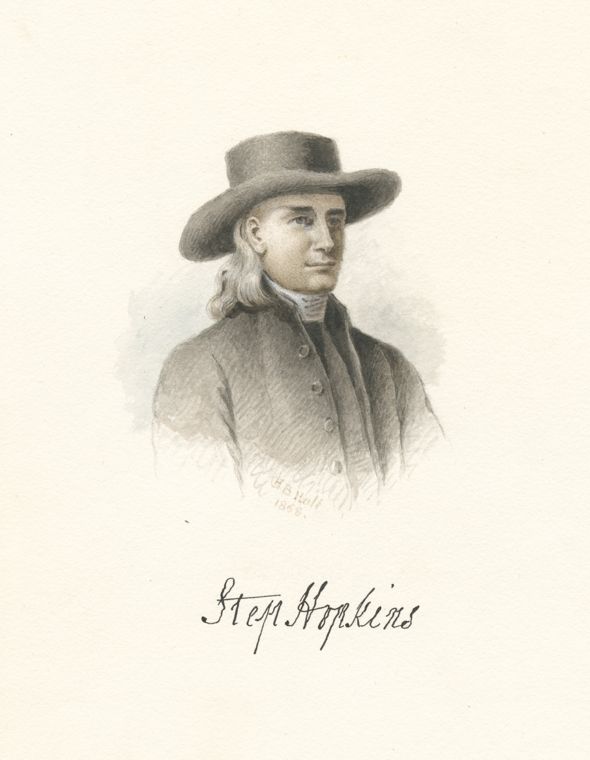
Stephen Hopkins may not be the first name people remember when they think of the Declaration of Independence, but he deserves a much larger place in the story of America’s founding. He was a self-educated man, a farmer’s son, a surveyor, merchant, judge, governor, educator, writer, and patriot. By the time he signed the Declaration, he had already spent decades serving Rhode Island and defending the rights of the colonies.
In John Trumbull’s famous painting The Declaration of Independence, Hopkins stands in the background wearing a hat. That small detail makes him easy to spot. But his real distinction was not the hat. It was the life of public service behind it, and the courage he showed when independence finally came before Congress.
Early Life in Rhode Island
Stephen Hopkins was born on March 7, 1707, in Providence, Rhode Island. His parents were William Hopkins and Ruth Wilkinson Hopkins. His family had deep roots in Rhode Island’s early colonial history. His great-grandfather, Thomas Hopkins, had followed Roger Williams to Providence in the 1600s, connecting Stephen’s family to the founding generation of Rhode Island.
Hopkins grew up on a farm in Scituate, Rhode Island. Like many men of his time, especially outside the wealthier colonial cities, he received little formal schooling. But he did not let that stop him. His mother gave him his first lessons. His grandfather and uncle taught him basic mathematics, and he spent time reading from his grandfather’s small but carefully chosen library.
That self-education mattered. Hopkins became one of those remarkable colonial figures who built a public life through curiosity, discipline, and practical experience. He learned enough mathematics to become a surveyor. He read enough history and literature to become a respected public thinker. And he gained enough trust from his neighbors to begin a long career in public service.
Marriage and Family Life
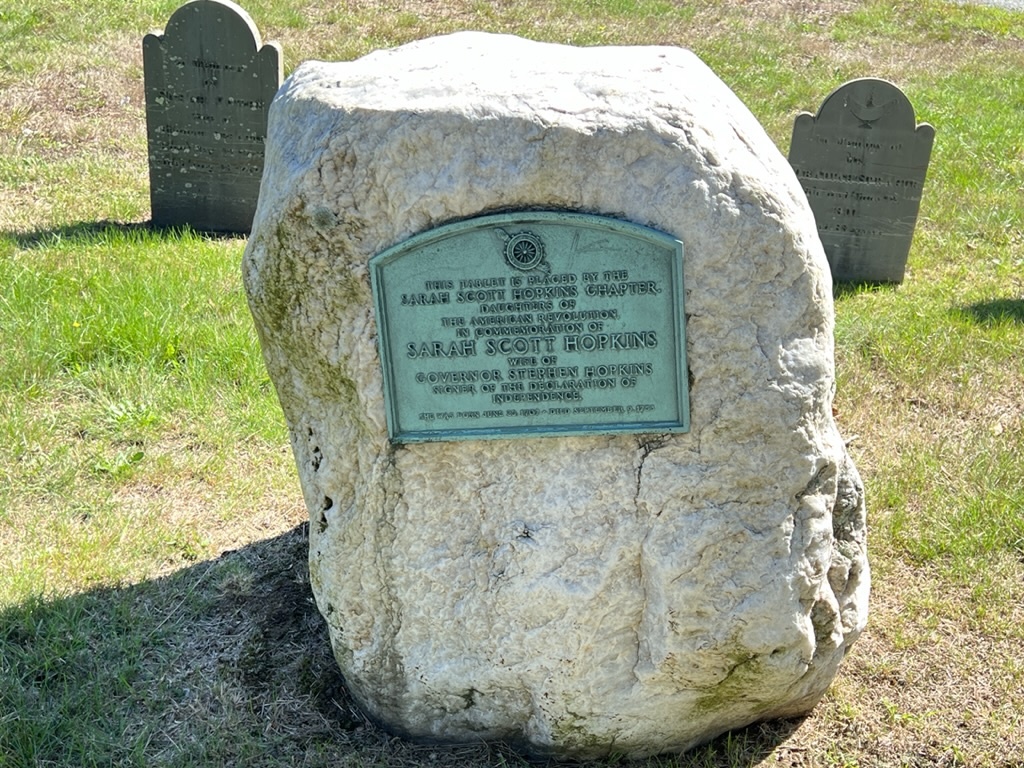
On October 9, 1726, Stephen Hopkins married Sarah Scott. Both were only 19 years old. Together, they had five sons and two daughters.
Sarah also came from a family with deep colonial roots. Her family history connected her to Providence’s early religious and civic life, including Quaker influences. Her great-grandfather, Richard Scott, became the first Quaker preacher in Providence.
Hopkins lived in a world where family, business, religion, and public life often overlapped. His personal relationships placed him among Rhode Island’s established colonial families, but his own reputation grew because of his ability, judgment, and work ethic.
A Young Man Trusted by His Community
Hopkins began his public career early. At only 24 years old, he was selected to moderate the first town meeting held in Scituate.
In 1732, he became town clerk. In 1735, he became president of the Town Council. From 1732 to 1741, he frequently represented Scituate in the Rhode Island General Assembly. In 1742, he became Speaker of the Assembly.
These were not minor roles. Colonial government depended on men who could handle local disputes, understand land issues, manage records, and represent community interests. Hopkins proved himself in each step. He built his public career from the ground up, starting in town government and moving into colonial leadership.
Merchant, Ship Owner, and Builder of Providence
Around 1740, Stephen Hopkins joined his brother Esek Hopkins in commercial ventures. In 1742, Stephen moved permanently to Providence. The brothers became involved in mercantile shipping, building and outfitting vessels.
This was an important turning point in his life. Hopkins was not just a politician. He understood business, trade, shipping, and the practical needs of a growing port town. He helped transform Providence from a small village with muddy streets into a thriving commercial center.
His public service also continued. From 1744 to 1751, he served in the General Assembly. From 1747 to 1749, he served as assistant justice of the Rhode Island Superior Court. In 1751, he became Chief Justice.
That combination of experience made him valuable. He understood local government, law, commerce, education, and colonial politics. By the middle of the 1700s, Stephen Hopkins had become one of Rhode Island’s most important public men.
Education, Science, and Public Improvement
Hopkins had a strong interest in education and learning. Although he had little formal schooling himself, he deeply valued knowledge.
Around 1754, he helped establish a public subscription library. He later became the first chancellor of Rhode Island College, which eventually became Brown University. He also helped found the Providence Gazette and Country Journalin 1762.
His interests reached beyond politics and business. He was a member of the American Philosophical Society of Newport and participated in scientific endeavors, including the observation of the transit of Venus in June 1769.
That side of Hopkins is easy to overlook, but it matters. The American founding generation included many men who believed public virtue, education, science, and liberty were connected. Hopkins fit that pattern. He believed communities improved when citizens learned, read, debated, and built institutions that lasted beyond one lifetime.
Governor of Rhode Island
Stephen Hopkins became governor of Rhode Island in 1755 and served several times through 1766. During these years, he often competed with Samuel Ward for the governorship in Rhode Island’s annual elections.
He also represented Rhode Island at the Albany Congress in 1754. That meeting brought colonial leaders together to discuss cooperation and defense during tensions with France and Native nations. There, Hopkins met Benjamin Franklin, who promoted the Albany Plan of Union.
The Albany Plan failed, but the friendship between Franklin and Hopkins continued. More than twenty years later, both men would be among the oldest signers of the Declaration of Independence.
Standing Up to Parliament
As conflict grew between the colonies and Great Britain, Hopkins became one of Rhode Island’s strongest defenders of colonial rights.
After Parliament passed measures such as the Sugar Act and Stamp Act, Hopkins wrote The Rights of Colonies Examined, published in 1764. In that pamphlet, he argued that British subjects should only be governed by laws to which they had given consent in some form.
That was a powerful argument. Hopkins made the case for colonial rights before many Americans fully embraced independence. His pamphlet came before John Dickinson’s better-known Letters from a Farmer in Pennsylvania.
Hopkins did not merely complain about British policy. He laid out a constitutional argument. He believed Parliament had overstepped its authority and that the colonies had rights that could not simply be brushed aside.
A Patriot Before Independence
Hopkins showed courage during the growing resistance to British authority. When John Hancock’s ship was seized by the British and sent to Newport, an angry mob burned it. British authorities wanted arrests and wanted those involved sent to England for trial.
Hopkins, serving as chief justice, refused to support that effort. He stated that he would not apprehend the men involved, nor would he allow executive officers to do so.
In 1774, Hopkins also introduced a bill in the Rhode Island General Assembly to prevent further importation of enslaved people and to free those he personally held. That action reflected a moral issue that sat uneasily beside the Revolution’s language of liberty. Like much of the founding era, Hopkins’ life contains both the ideals of freedom and the contradictions of the age.
The First Continental Congress
In 1774, Rhode Island selected Stephen Hopkins as one of its delegates to the First Continental Congress. By then, he was an older man with decades of political experience.
He understood the seriousness of the conflict. At one point, he warned that the dispute between the colonies and Britain would not be settled by polite words alone. He declared that “powder and ball” would decide the question and that the gun and bayonet would finish the contest.
That was a bold statement. Hopkins saw where things were heading. He may have hoped for peace, but he also understood that liberty might require armed resistance.
In July 1775, he signed the Olive Branch Petition, which still sought a peaceful resolution with King George III. But events kept moving toward independence. Hopkins also helped arrange for his younger brother, Esek Hopkins, to become the first commander-in-chief of the Continental Navy.
Stephen Hopkins and the Declaration of Independence
By the summer of 1776, Stephen Hopkins was nearly 70 years old. He suffered from what was called “shaking palsy,” a condition that made his hand tremble. Yet he remained present in Congress during one of the most important debates in American history.
During the intense debate over independence, Hopkins provided one of the more memorable human moments. As John Dickinson spoke at length against independence, a thunderstorm broke over Philadelphia. A loud clap of thunder rattled the building. Hopkins, who had been resting his head on a hickory cane, dropped it and looked around sharply.
John Penn of North Carolina, sitting behind him, thought Hopkins had been frightened and leaned forward to reassure him. Penn explained that Dr. Franklin’s lightning rod protected the State House.
Hopkins was not worried about lightning. He reportedly roared that he did not care about the rod or the lightning bolt. He was simply tired of Dickinson’s long speech.
On July 4, 1776, Stephen Hopkins voted to approve the Declaration of Independence. On August 2, he signed the engrossed copy.
Because of his shaking palsy, his signature appears unsteady. He had to use his left hand to steady his right hand as he signed. According to tradition, Hopkins said, “My hand trembles, but my heart does not.”
That line captures his legacy better than almost anything else. His body may have been weakened by age and illness, but his conviction remained firm.
The Articles of Confederation and Failing Health
In June 1776, Hopkins was appointed to the committee formed to draft America’s first national constitution, the Articles of Confederation. Each state had one representative on that committee.
But his health was declining. Soon after, he returned to Rhode Island. He had given many years to public life, and by the time independence came, he had already done more than most men could hope to do in a lifetime.
Final Years and Death
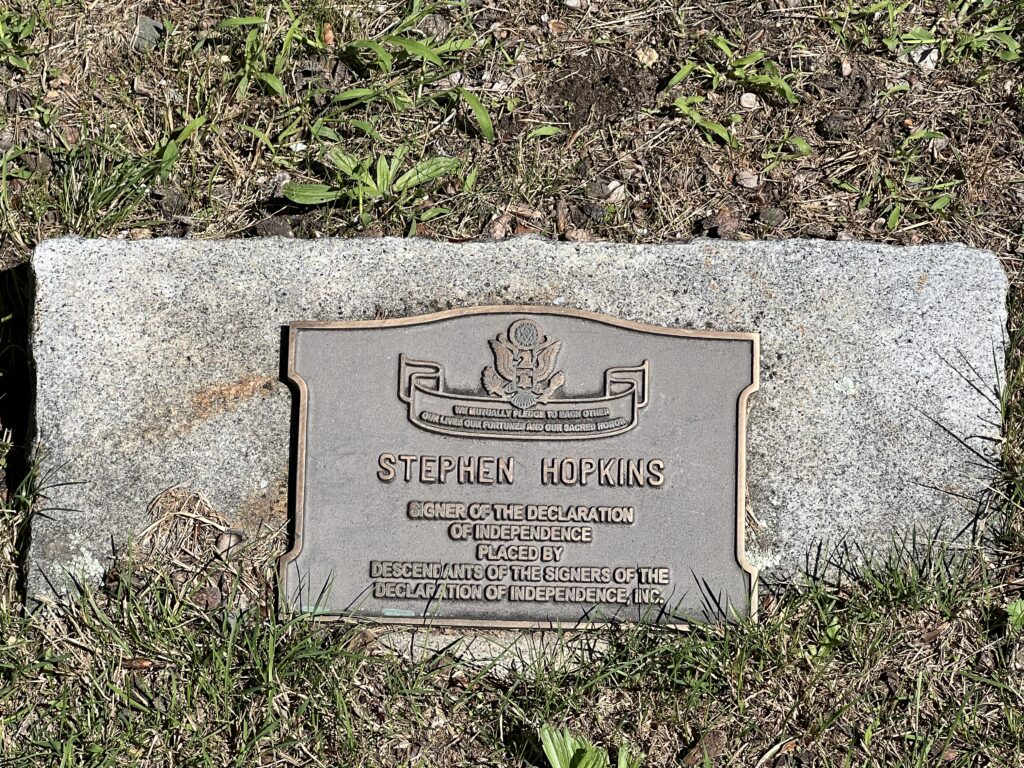
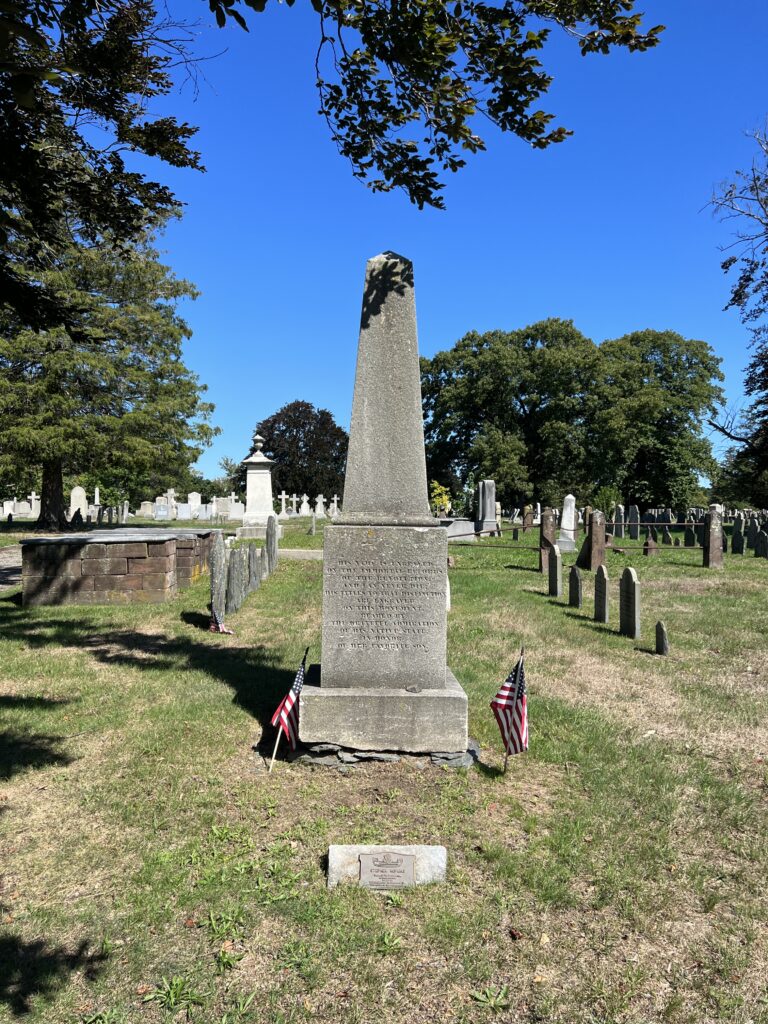
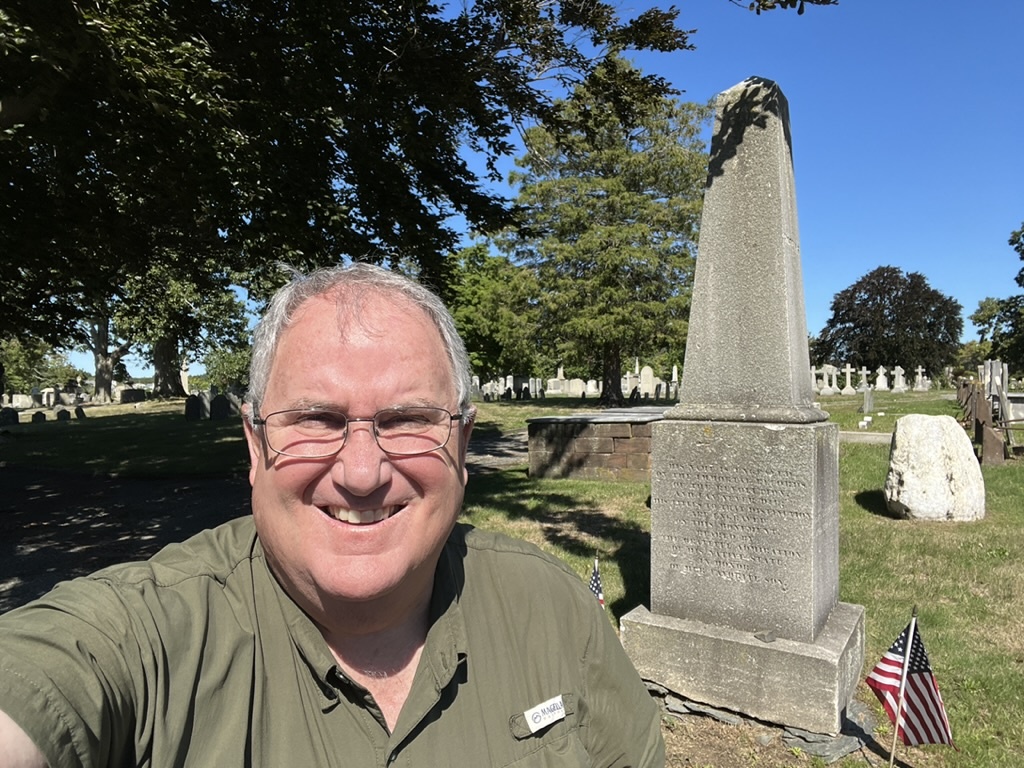
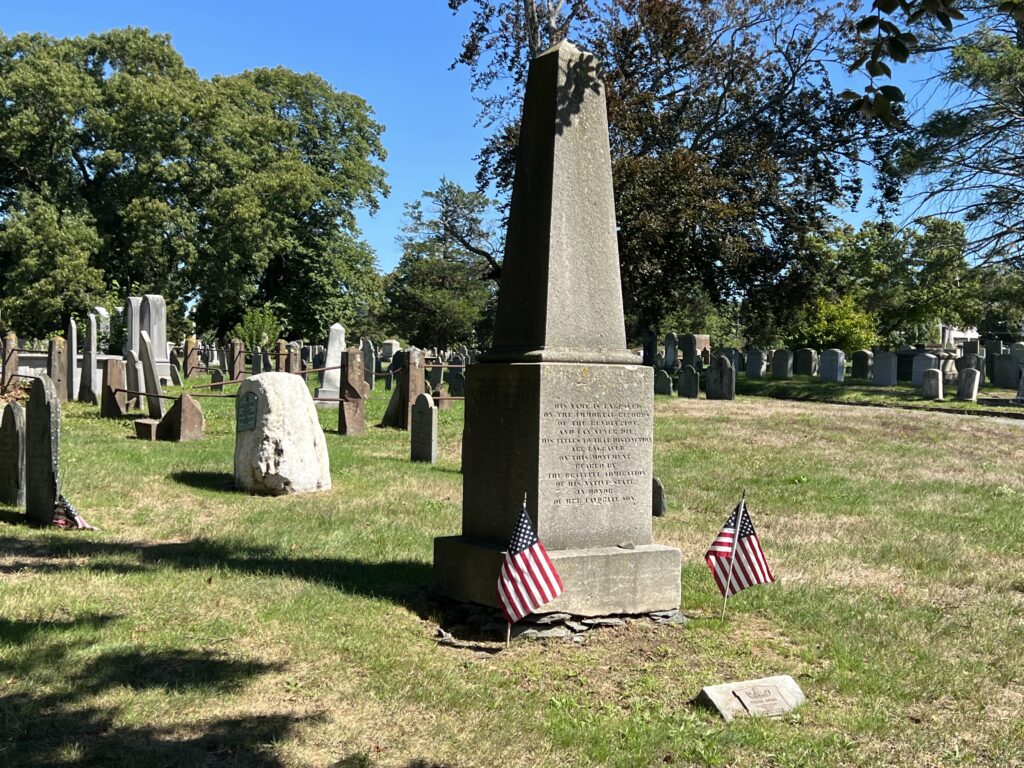
Stephen Hopkins died on July 13, 1785, in Providence, Rhode Island. He was 78 years old. He was buried in the North Burying Ground in Providence.
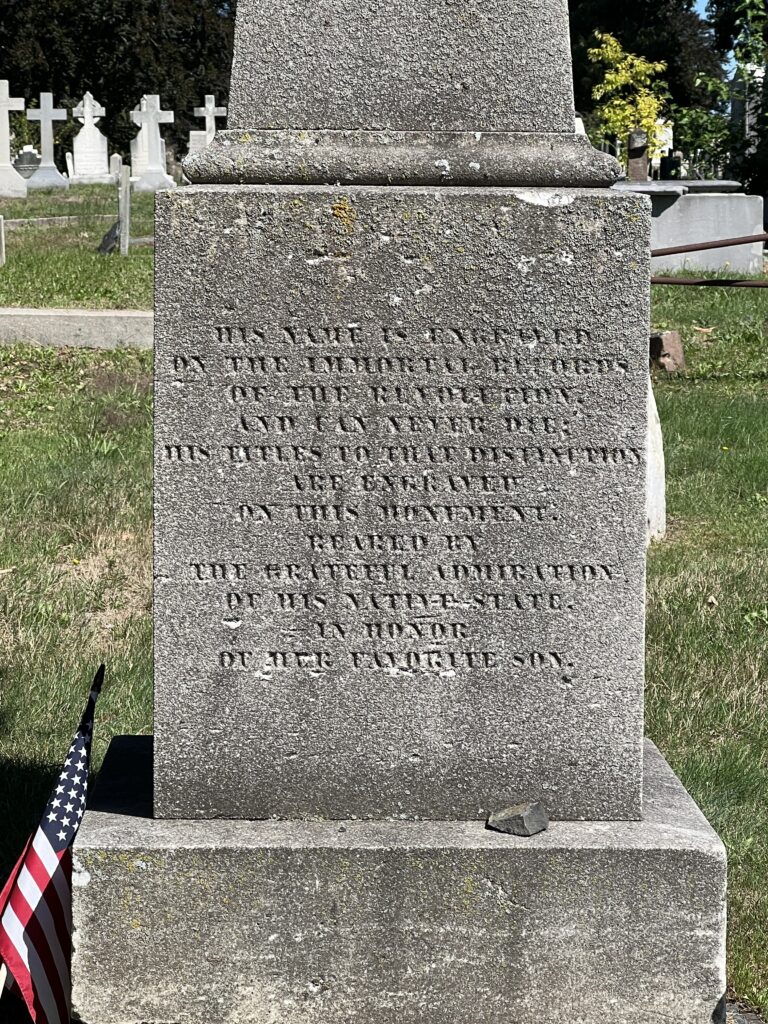
His funeral drew an impressive procession. Judges, college officials, students, citizens, and public leaders followed him to the cemetery. Rhode Island later honored him with a special monument at his gravesite.
The inscription on the monument praised him as a man of “revolutionary fame,” remembered for his signature on the Declaration of Independence and for standing among the front rank of American statesmen and patriots.
His Home and Public Memory
Stephen Hopkins’ home still stands in Providence at the corner of Hopkins and Benefit Streets. It is one of the oldest buildings in the city. He lived there from 1743 until his death more than forty years later.
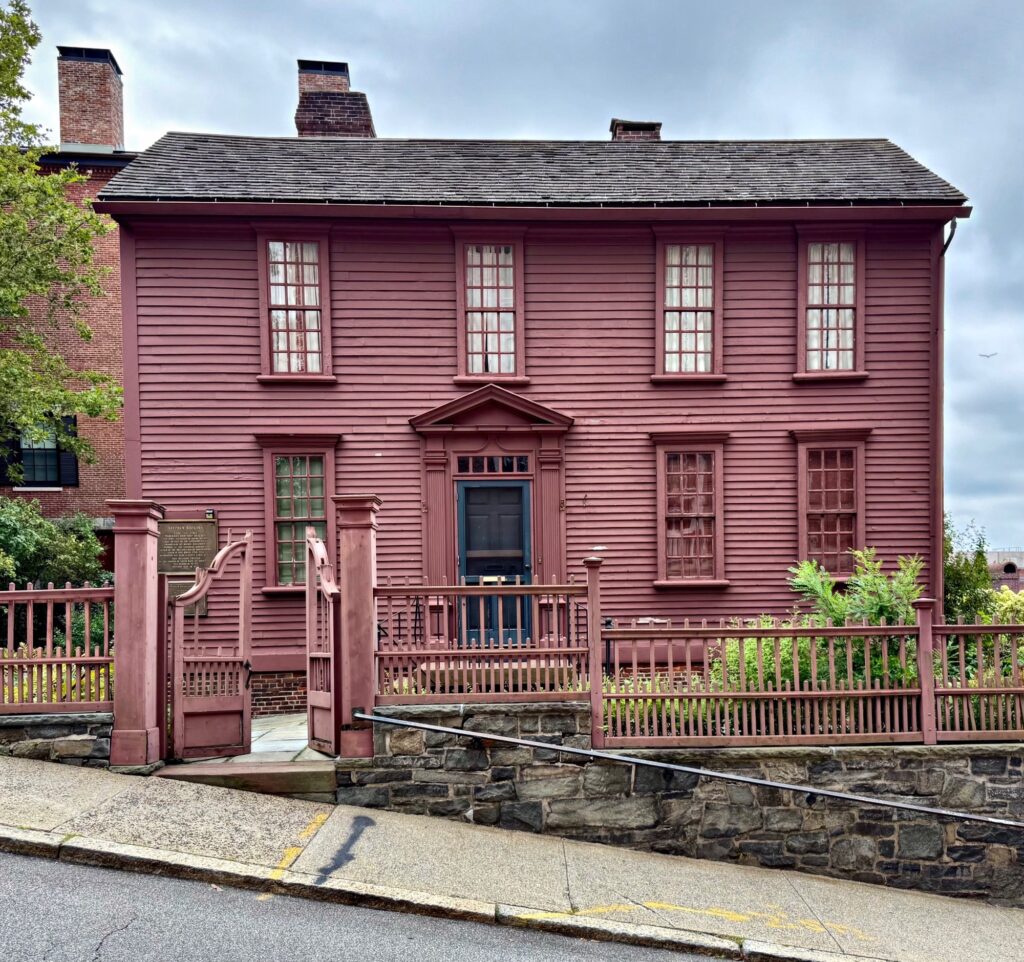
The house was saved from destruction in 1927 by the local chapter of the Daughters of the American Revolution and moved to its present location. Today, it stands near Brown University and the Rhode Island School of Design, surrounded by the modern city that grew out of the world Hopkins helped build.
His memory also lives on in Washington, D.C. Near the Washington Monument, one of the granite blocks honoring the signers of the Declaration bears his name. In the U.S. Capitol, John Trumbull’s famous painting shows him standing in the background, wearing his hat.
Legacy of Stephen Hopkins
Stephen Hopkins lived a remarkable American life before there was a United States of America. He rose from limited formal education to become one of the most respected men in Rhode Island. He served as surveyor, town official, legislator, judge, chief justice, governor, merchant, educator, writer, and delegate to Congress.


He helped build Providence. He helped shape Rhode Island. He defended colonial rights before independence became popular. He voted for independence when the time came. And with a trembling hand but steady heart, he signed the Declaration of Independence.
For anyone visiting his grave today, Stephen Hopkins offers a powerful reminder that the American founding was not carried by one kind of man. It included soldiers, lawyers, merchants, farmers, writers, judges, and self-educated citizens who stepped forward when history demanded courage.
Hopkins may not be the most famous signer, but he was one of the most experienced. He had spent a lifetime preparing for the moment when America would have to decide whether to remain dependent or become free.
And when that moment came, his hand trembled.
But his heart did not.
Leave a Reply