Benjamin Harrison was a signer of the Declaration of Independence from Virginia
Benjamin Harrison
Signer of the Declaration of Independence (Virginia)
Benjamin Harrison was one of Virginia’s most prominent Revolutionary-era leaders—a wealthy planter, seasoned legislator, and a man known for both his political influence and his booming sense of humor. Though he came from privilege, Harrison committed himself to the patriot cause and helped guide Virginia and the young United States through some of its most difficult years.
Birth, Family, and Early Life
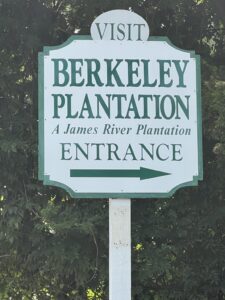
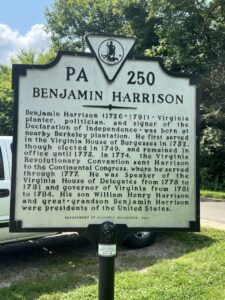
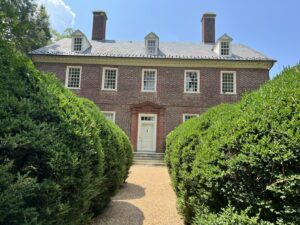
Benjamin Harrison was born on April 5, 1726, at Berkeley Plantation in Charles City County, Virginia. He was the eldest son of Benjamin Harrison IV and Anne Carter, members of two of Virginia’s most established families. Berkeley, overlooking the James River, had been in the Harrison family since the early colonial period and served as the center of their wealth and influence.
The Harrison lineage stretched back to the early 1600s, when an ancestor emigrated from England and became a successful planter and colonial official. By the time Benjamin V was born, the family was already deeply involved in Virginia’s political life.
Like many sons of the Virginia gentry, Harrison received a classical education and later attended the College of William & Mary. Although he did not complete a degree, the experience connected him with the colony’s political and social elite.
He eventually married Elizabeth Bassett, and together they raised a large family. Among their children was William Henry Harrison, who would later become the ninth President of the United States. A great-grandson, also named Benjamin Harrison, would become the twenty-third president—making the signer the patriarch of one of America’s presidential families.
Planter, Merchant, and Legislator
Harrison spent much of his life as a planter, merchant, and public official. His wealth came primarily from tobacco cultivation at Berkeley Plantation and other family properties.
His political career began early. By the late 1740s, he had been elected to the Virginia House of Burgesses, the colony’s legislative assembly. He served there for decades, representing both Charles City and Surry counties, and became one of the colony’s most experienced lawmakers.
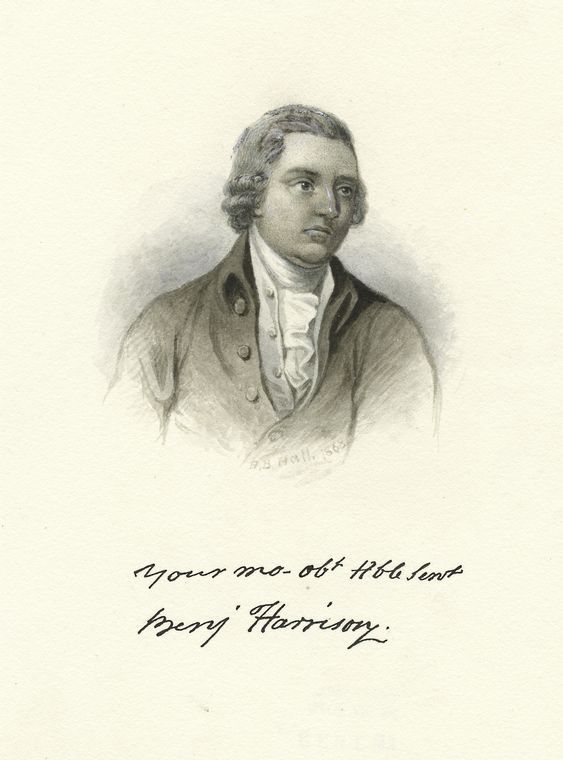
During the growing tensions between the colonies and Great Britain, Harrison aligned himself with the patriot cause. He joined protests against British policies and participated in efforts to coordinate colonial resistance.
Role in the Continental Congress
In 1774, Harrison was chosen as a delegate to the Continental Congress, where he represented Virginia during the critical early years of the Revolution.
He quickly became an important figure. Known for his commanding presence and strong personality, Harrison chaired the Committee of the Whole during the final debates over the Declaration of Independence.
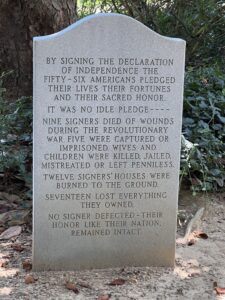
When the moment came, he joined his fellow delegates in signing the Declaration in 1776, pledging “life, fortune, and sacred honor” to the American cause.
Harrison also signed the earlier Continental Association, a key agreement among the colonies to boycott British goods and resist imperial policies.
Leadership in Revolutionary Virginia
After his service in Congress, Harrison returned to Virginia, where his leadership was still in high demand. He served in the Virginia House of Delegates and eventually became its Speaker, a powerful position in the new state government.
In 1781, at a critical moment during the Revolutionary War, Harrison was elected Governor of Virginia.
His governorship came at a difficult time. The war had drained the state treasury, and the government struggled with finances and logistics. Despite these challenges, Harrison helped guide Virginia through the final years of the conflict.
After his term as governor ended in 1784, he returned once more to the House of Delegates, continuing his long record of public service.
Views on the Constitution
Like many Revolutionary leaders, Harrison supported independence but had concerns about the new federal Constitution. In 1788, he voted against ratification, believing the document lacked adequate protections for individual rights.
His concerns were shared by other Anti-Federalists and eventually contributed to the adoption of the Bill of Rights, which addressed many of those fears.
Personality and Reputation
Harrison was known for his large physical stature and an equally large personality. Contemporary accounts often described him as sociable, witty, and good-natured, someone who could ease tense political moments with humor.
Despite his jovial nature, he was a serious political leader who spent decades in public office and helped shape both colonial and early American government.
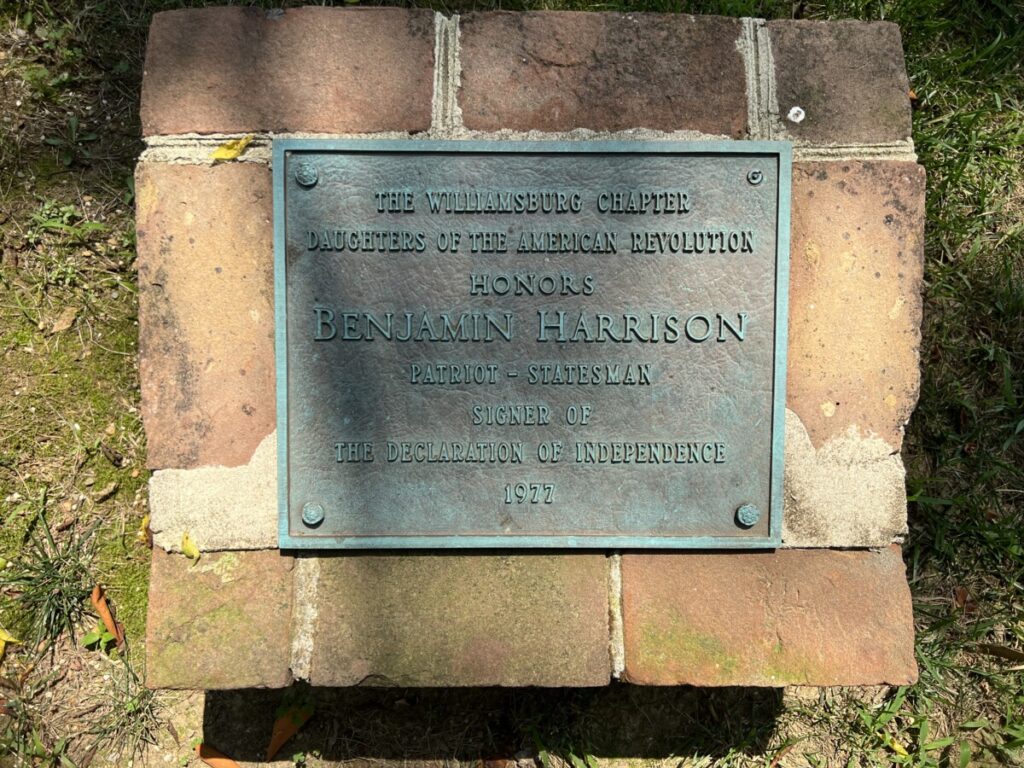
Death and Burial
Benjamin Harrison V died on April 24, 1791, at his home at Berkeley Plantation in Charles City County, Virginia, just days after being reelected to the state legislature.
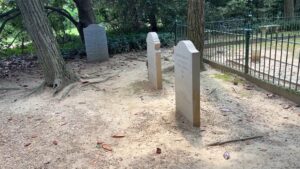
He was buried on the plantation grounds, beside his wife, Elizabeth, who died the following year.
Legacy
Benjamin Harrison’s legacy extends far beyond his signature on the Declaration. He was:
- A long-serving colonial legislator
- A delegate to the Continental Congress
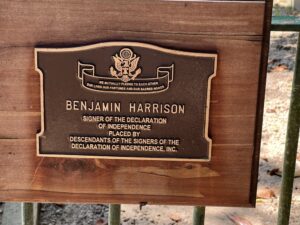
- A signer of the Declaration of Independence
- Speaker of the Virginia House of Delegates
- Governor of Virginia during the Revolution
He also founded a political dynasty. His son, William Henry Harrison, became president in 1841, and his great-grandson, Benjamin Harrison, served as president from 1889 to 1893.
From colonial planter to Revolutionary governor, Harrison’s life reflected the transformation of Virginia—and the nation—during the founding era.
If you’d like, I can also:
- Add a burial-site section in your standard SignersTour format
- Create the 150-word plaque/social version
- Build the full SignersTour page layout with maps and travel notes.
Reprint with out wikipedia
Benjamin Harrison V
Signer of the Declaration of Independence (Virginia)
Benjamin Harrison V was one of Virginia’s most prominent leaders during the Revolutionary era—a wealthy planter, seasoned legislator, and a man remembered for both his political influence and his booming sense of humor. Though born into privilege, he devoted much of his life to public service and to the cause of American independence.
Birth, Family, and Early Life
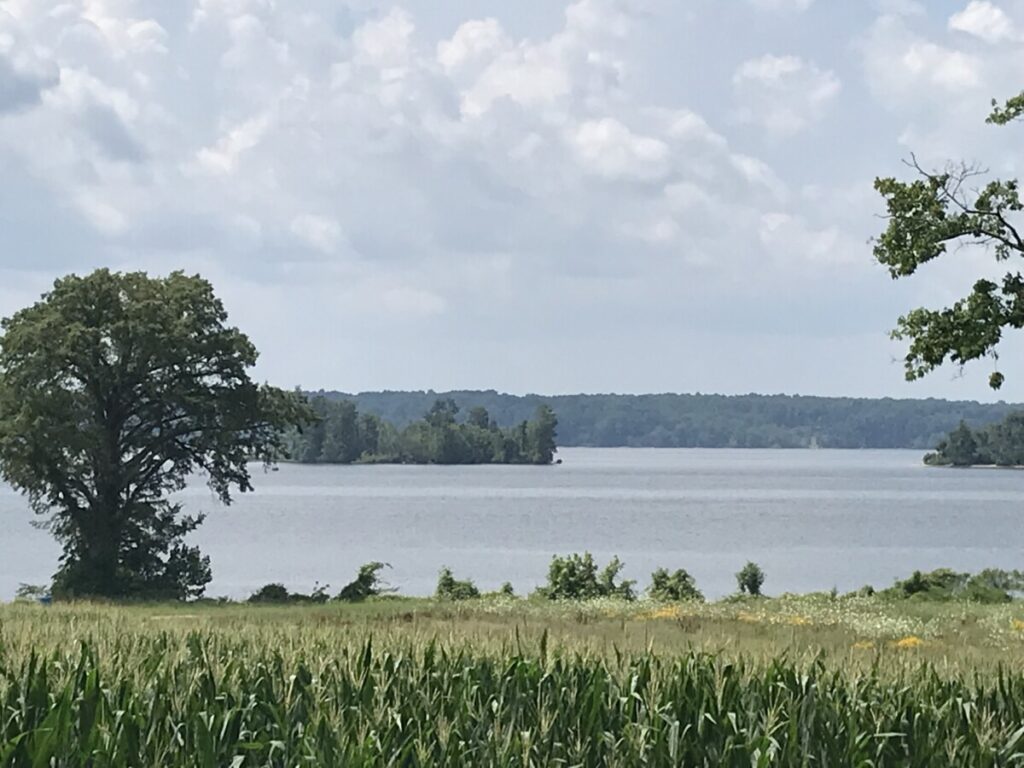
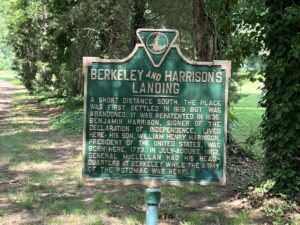
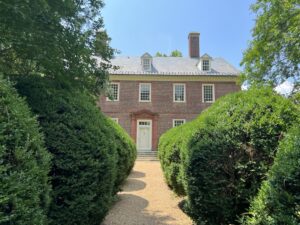
Benjamin Harrison V was born on April 5, 1726, at Berkeley Plantation in Charles City County, Virginia. He was the eldest son of Benjamin Harrison IV and Anne Carter, members of two of the colony’s most established families. Berkeley, overlooking the James River, had been the Harrison family home since the early colonial period and served as the center of their wealth and influence.
The Harrison family’s roots in Virginia reached back to the early 1600s, when an ancestor emigrated from England and became a successful planter and colonial official. By the time Benjamin V was born, the family was already deeply involved in Virginia’s political life.
Like many sons of the Virginia gentry, Harrison received a classical education and later attended the College of William & Mary. Although he did not complete a degree, the experience connected him with many of the colony’s future leaders.
He married Elizabeth Bassett, and together they raised a large family. One of their sons, William Henry Harrison, would later become the ninth President of the United States. A great-grandson, also named Benjamin Harrison, would become the twenty-third president, giving the signer a unique place in American presidential history.
Planter, Merchant, and Colonial Legislator
Harrison spent much of his adult life as a planter and merchant, managing extensive tobacco operations at Berkeley Plantation and other family properties. His wealth and status made him a natural figure in colonial leadership.
His political career began early. In the late 1740s, he was elected to the Virginia House of Burgesses, the colony’s legislative assembly. He would serve there for many years, representing both Charles City and Surry counties and gaining a reputation as one of the most experienced lawmakers in Virginia.
As tensions with Great Britain increased, Harrison joined other colonial leaders in opposing British taxation and policies. He supported colonial rights and became part of the growing resistance movement.
Delegate to the Continental Congress
In 1774, Harrison was selected as a delegate to the Continental Congress, where he represented Virginia during the most critical years leading up to independence.
He quickly became an important and respected figure among the delegates. Known for his large stature and good humor, he was also a steady and capable leader. During the final debates over independence, Harrison served as chairman of the Committee of the Whole, presiding over discussions that culminated in the adoption of the Declaration.
In 1776, he signed the Declaration of Independence, committing himself, his fortune, and his honor to the American cause. He had earlier signed the Continental Association, the colonies’ agreement to resist British policies through economic pressure.
Leadership in Revolutionary Virginia
After his service in Congress, Harrison returned to Virginia, where he continued his political career. He served in the Virginia House of Delegates and was eventually elected Speaker of the House, one of the most powerful positions in the state government.
In 1781, during a difficult period in the Revolutionary War, Harrison was elected Governor of Virginia. The state was facing serious financial and military challenges, and his administration focused on maintaining government stability and supporting the war effort.
He served as governor until 1784 and then returned once again to the House of Delegates, continuing his long career in public service.
Views on the Constitution
Although Harrison had supported independence, he had reservations about the new federal Constitution. In 1788, he voted against ratification, believing the document did not include sufficient protections for individual rights.
These concerns were shared by other Anti-Federalists and helped lead to the adoption of the Bill of Rights, which addressed many of the objections raised during the ratification debates.
Personality and Character
Benjamin Harrison was known for his large physical size and an equally large personality. Contemporary accounts often described him as sociable, witty, and good-natured. He was known to lighten tense moments in Congress with humor, even while playing a serious role in national affairs.
Despite his jovial reputation, Harrison was a dedicated public servant who spent decades in government, helping guide Virginia from colony to independent state.
Death and Burial
Benjamin Harrison V died on April 24, 1791, at his home at Berkeley Plantation in Charles City County, Virginia, just days after being reelected to the state legislature.
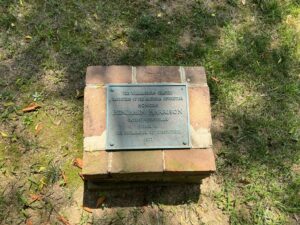
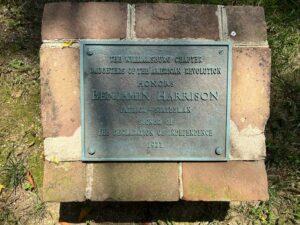
He was buried on the grounds of Berkeley Plantation, where generations of the Harrison family had lived and where his wife, Elizabeth, would later be laid to rest beside him.
Legacy
Benjamin Harrison V’s life spanned the transformation of Virginia from British colony to independent state. Over the course of his career, he served as:
- Member of the Virginia House of Burgesses
- Delegate to the Continental Congress
- Signer of the Declaration of Independence
- Speaker of the Virginia House of Delegates
- Governor of Virginia during the Revolutionary War
He also became the patriarch of a remarkable political family, with both a son and a great-grandson serving as President of the United States.
From the halls of colonial government to the signing of the Declaration and the governorship of Virginia, Benjamin Harrison V played a steady and influential role in the nation’s founding.





Leave a Reply