John Hancock
Merchant, Patriot, President of the Continental Congress
Born: January 12, 1737 – Braintree (now Quincy), Massachusetts
Died: October 8, 1793 – Boston, Massachusetts
The Man Behind the Famous Signature
If you ask most Americans to name a signer of the Declaration of Independence, John Hancock is often the first to come to mind. His bold, sweeping signature became so iconic that the phrase “put your John Hancock here” still means “sign your name.”
But Hancock was far more than a famous autograph. He was a wealthy Boston merchant, an early supporter of the patriot cause, president of the Continental Congress during the nation’s most critical hour, and the first governor of the Commonwealth of Massachusetts.

Family Roots and Early Life
John Hancock was born on January 12, 1737, in Braintree, Massachusetts (now Quincy). He was the son of the Reverend John Hancock and Mary Hawke Thaxter.
When John was just seven years old, his father died. His future changed dramatically when his wealthy uncle, Thomas Hancock, a powerful Boston merchant, adopted him. Thomas and his wife, Lydia, had no children of their own and chose young John as their heir.
Under his uncle’s care, John was given the finest education and social training. He attended the Boston Latin School and later Harvard College, graduating in 1754 at just 17.
From Merchant’s Apprentice to “Merchant King”
After college, Hancock began working in his uncle’s business, the powerful trading firm known as the House of Hancock. He was trained in every aspect of the operation, including shipping, trade, and finance.
In 1764, upon Thomas Hancock’s death, 27-year-old John inherited the business and became one of the wealthiest men in the American colonies.
He embraced the lifestyle of a prominent Boston gentleman—fine clothes, elegant dinners, and generous philanthropy. Hancock donated to churches, helped the poor, funded public works, and supported civic improvements throughout Boston.

Entering Public Life
At first, Hancock was a loyal subject of the British Empire. But tensions grew as Parliament imposed new taxes on the colonies.
The turning point came with the Stamp Act of 1765. While initially cautious, Hancock soon joined other patriots in opposing taxation without representation. He began supporting protest efforts and became more active in colonial politics.
His popularity soared when British authorities seized one of his ships, the Liberty, on smuggling charges. Although he was eventually cleared, the trial made him a hero to the patriot cause.
By the early 1770s, Hancock had become a leading political figure in Massachusetts.
Toward Revolution
As tensions escalated, Hancock aligned more closely with radical patriots like Samuel Adams.

After the Boston Tea Party, British authorities charged Hancock and others with treason. In 1774, the Massachusetts Provincial Congress elected him president.
In April 1775, Hancock and Samuel Adams were staying in Lexington when they were warned that British troops were marching toward them. The confrontation at Lexington and Concord soon ignited the Revolutionary War.
President of the Continental Congress
Hancock was elected to the Second Continental Congress in Philadelphia. In 1775, after Peyton Randolph stepped down, Hancock was unanimously chosen as President of Congress.
In this role, he presided over debates, coordinated military funding, and helped guide the colonies toward independence.
When the Declaration of Independence was approved in July 1776, Hancock signed first as President of Congress—placing his name boldly across the parchment.
According to popular legend, he signed so large that King George III could read it “without spectacles,” though historians are unsure whether he actually said those words.
Later War Years and the Articles of Confederation
Hancock served as president of Congress for more than two years, helping guide the colonies through some of the war’s darkest periods.
He played a key role in mediating disputes among the states as they debated the Articles of Confederation, the young nation’s first constitution.
After resigning from Congress, he returned to Boston, where he used his personal wealth to help rebuild the city and assist families affected by the war.
Governor of Massachusetts
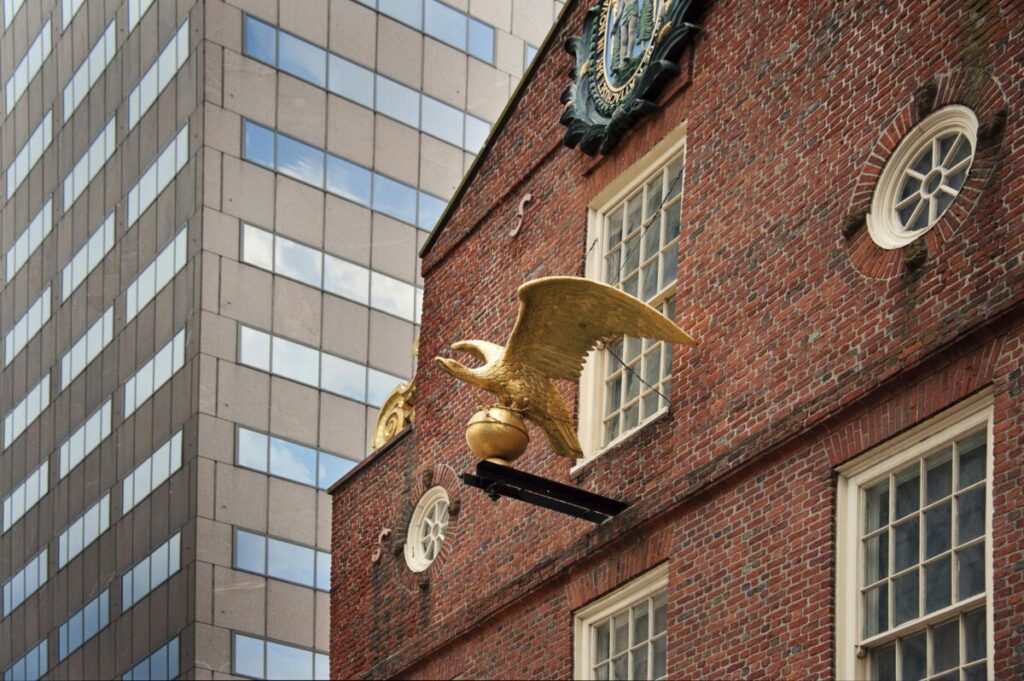
In 1780, Hancock was elected the Commonwealth of Massachusetts’s first governor under its new state constitution.
He served multiple terms, remaining extremely popular despite declining health from severe gout.
In 1785, he was again elected President of Congress, becoming the first person chosen to that office in two non-consecutive terms. However, illness prevented him from serving, and he soon resigned.
Role in Ratifying the Constitution
During the Massachusetts ratifying convention in 1788, Hancock initially hesitated to support the new U.S. Constitution. But after careful consideration, he backed ratification and helped secure its approval in a close vote.


His support was instrumental in bringing Massachusetts—and eventually the new nation—under the Constitution.
Family Life
Hancock married Dorothy “Dolly” Quincy, a respected member of a prominent Massachusetts family.
The couple had two children, but both died young—a son at age ten and a daughter earlier—leaving the Hancocks without surviving heirs.
Death and Legacy
John Hancock died on October 8, 1793, in Boston at the age of 56. His funeral was attended by thousands, a reflection of his immense popularity and influence.
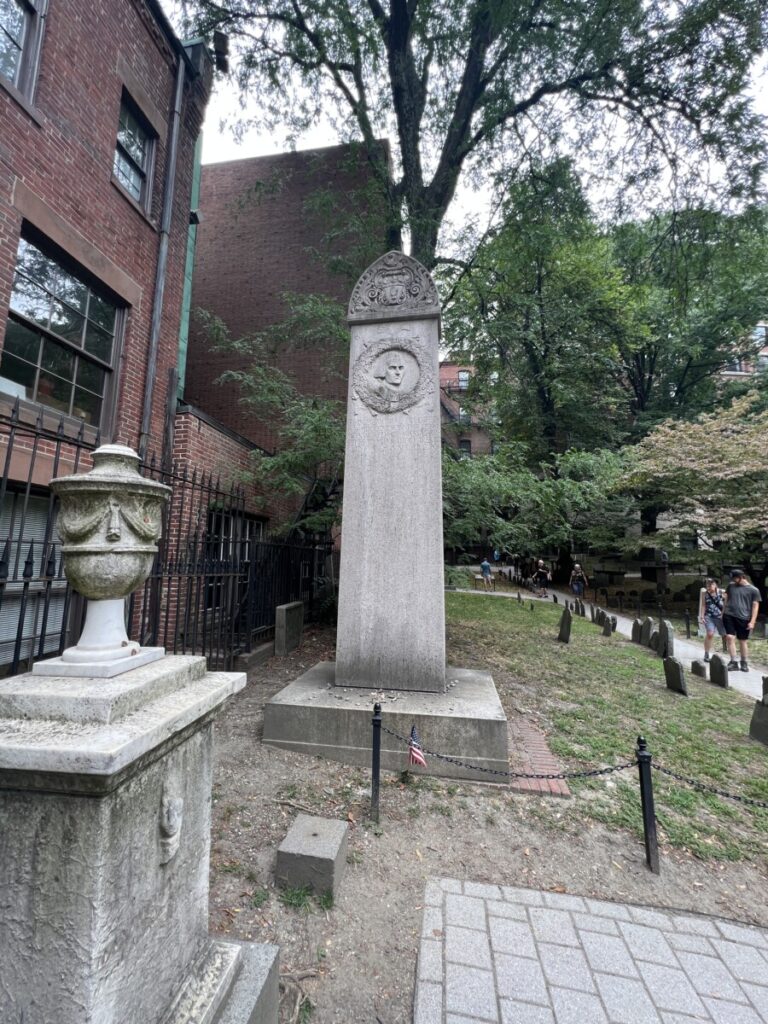
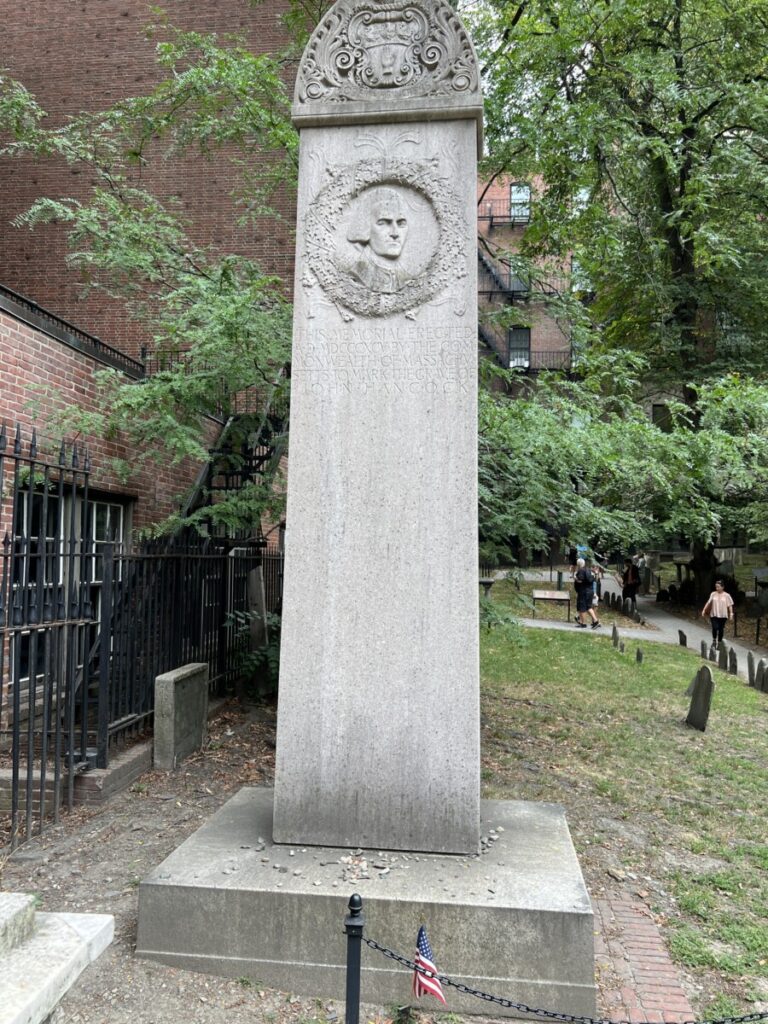
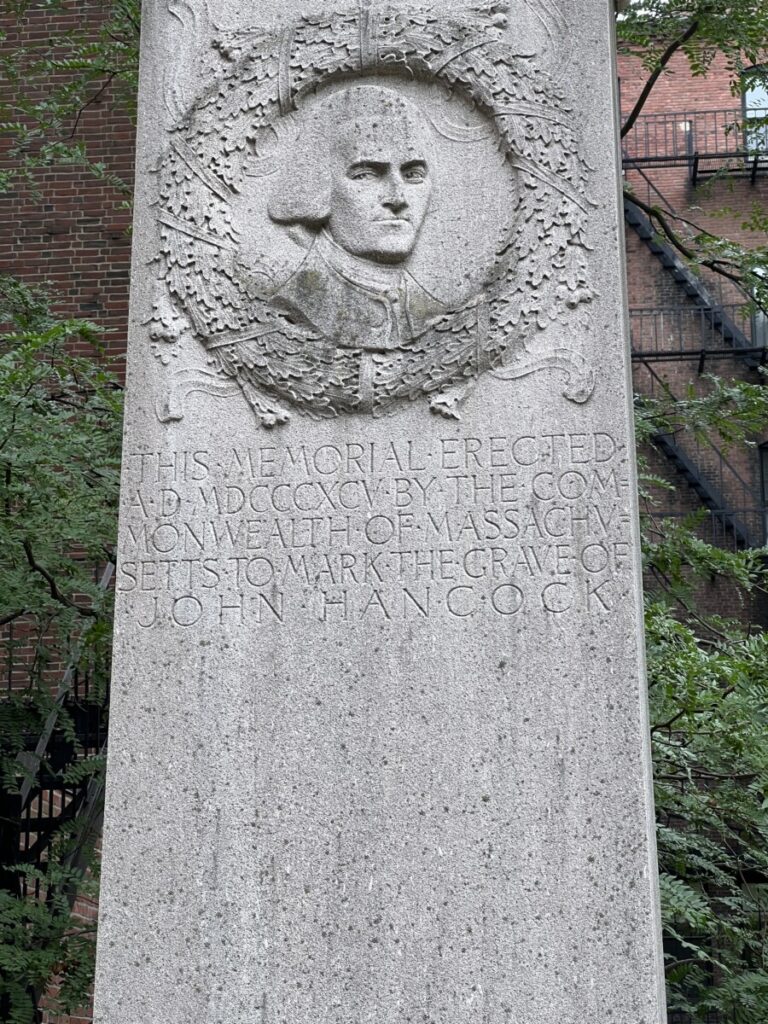
He was buried at the historic Granary Burying Ground in Boston, alongside other Revolutionary-era leaders.
Today, Hancock is remembered not only for his dramatic signature but also for his leadership, generosity, and dedication to the American cause.
Government Service and Major Roles
- President, Massachusetts Provincial Congress (1774)
- Delegate to the Second Continental Congress
- President of the Continental Congress (1775–1777)
- First Governor of Massachusetts (1780–1785; later terms)
- President of Congress (elected again in 1785)
- President of the Massachusetts Ratifying Convention (1788)
Burial Site
Granary Burying Ground
Tremont Street, Boston, Massachusetts
John Hancock rests among fellow patriots in one of Boston’s most historic cemeteries, a fitting final home for one of the Revolution’s most recognizable leaders.
Leave a Reply