Oliver Wolcott
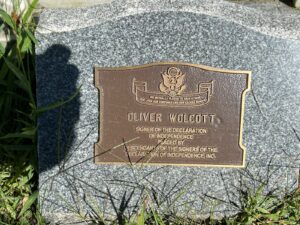
Signer of the Declaration of Independence from Connecticut
Birth, Family, and Early Life
Oliver Wolcott was born on November 20, 1726, in Windsor, Connecticut, the fourteenth of fifteen children born to Governor Roger Wolcott and Sarah Drake Wolcott. He grew up in a prominent and deeply religious New England family with a strong tradition of public service.
The Wolcott line traced its roots back to England, with ancestors who emigrated to Massachusetts in 1630 and soon settled in Windsor, one of Connecticut’s earliest towns. The family quickly became influential in colonial politics, law, and the militia. Oliver’s father served as a colonial governor, judge, military officer, and legislator, setting a powerful example of civic duty for his son.
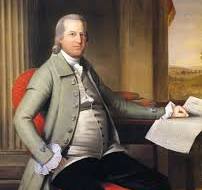
Contemporaries described Oliver Wolcott as tall, dignified, and deeply principled—a man of integrity and strong Puritan faith.
Education and Early Career
Wolcott received a classical education and graduated from Yale College in 1747. After his studies, he entered military service during the French and Indian conflicts, helping defend the northern frontier.
When the war ended, he briefly studied medicine but soon chose a different path. He settled in Litchfield, Connecticut, where he became a merchant and entered public service.
In 1751, Wolcott was appointed sheriff of Litchfield County, a post he held for twenty years. His long tenure in this office made him one of the region’s best-known public officials.
Road to the Revolution
Like many colonial leaders, Wolcott became increasingly concerned about British policies following the French and Indian War. Taxes, trade restrictions, and imperial authority stirred unrest throughout the colonies.
By 1775, Connecticut sent Wolcott to represent the colony in the Continental Congress. He quickly aligned himself with the independence movement. In early 1776, he wrote that the colonies’ conflict with Britain might end in a “total disseverance” from the mother country.
Signer of the Declaration of Independence
Although Wolcott supported independence, he was seriously ill during the summer of 1776 and had to leave Congress. As a result, he did not sign the Declaration at the same time as many of the other delegates.
After recovering, he returned and later signed the Declaration, ensuring his name would be forever associated with the founding document.
Military Service During the Revolution
Wolcott was not only a statesman—he was also a soldier. Throughout the Revolutionary War, he served in the Connecticut militia, rising from captain to major general.
His wartime roles included:
- Commissary for supplies to the troops.
- Commissioner of Indian affairs for the northern department.
- Brigadier General commanding fourteen militia regiments in 1776.
- Volunteer leader at the campaign against British General Burgoyne in 1777.
- The Major General is responsible for the defense of Connecticut’s coastline.
- Member of the Council of Safety in 1780, overseeing the prosecution of the war.
He also served repeatedly in the Continental Congress from 1775 to 1783, except for one year when he was not elected.
One of the more colorful stories associated with Wolcott comes from July 1776, when he helped bring a lead statue of King George III to Litchfield. The statue was melted down and turned into musket balls for the Continental Army—a symbolic transformation of royal authority into ammunition for independence.
Post-War Political Career
After the war, Wolcott continued his long record of public service.
His later roles included:
- Judge on the Connecticut Supreme Court of Errors (1784).
- Commissioner in negotiations with Native American nations.
- Lieutenant Governor of Connecticut (1786–1796).
- Delegate to the state convention that ratified the U.S. Constitution.
- Governor of Connecticut, beginning in 1796, after the death of Governor Samuel Huntington.
He held the governorship until his death.
Family and Personal Life
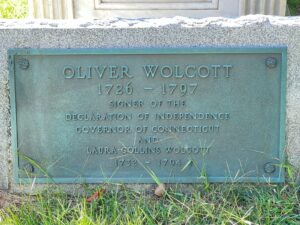
Oliver Wolcott married Laura Collins (1733–1794). Together, they had several children, including Oliver Wolcott Jr., who later became Secretary of the Treasury under Presidents George Washington and John Adams.
This made the Wolcotts one of the most influential political families of early Connecticut, with leadership spanning multiple generations.
Death and Burial
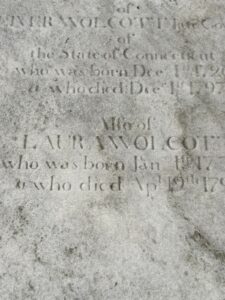
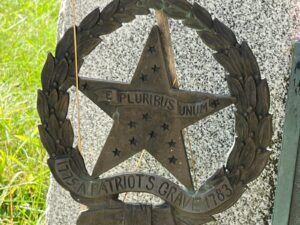
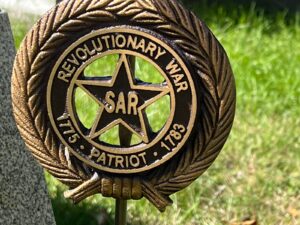
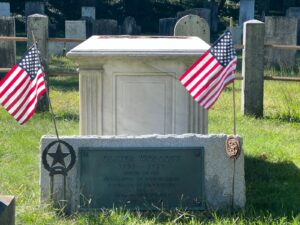
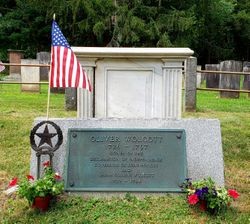
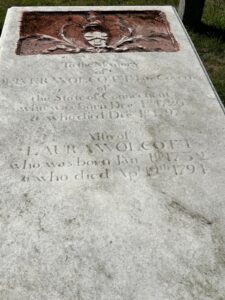
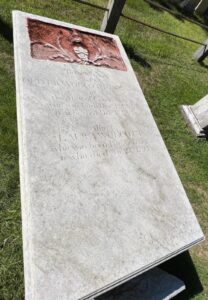
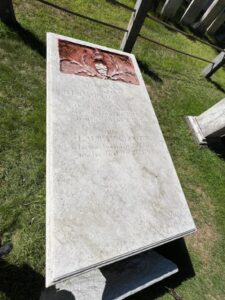
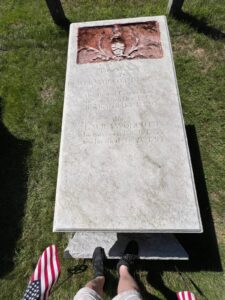
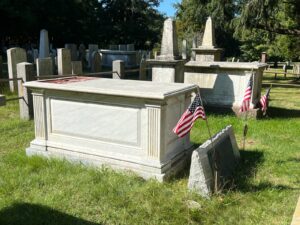
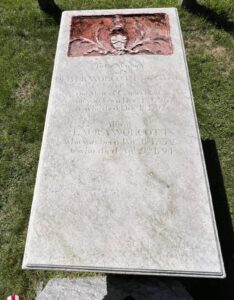
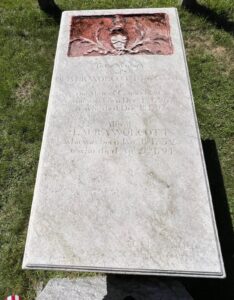
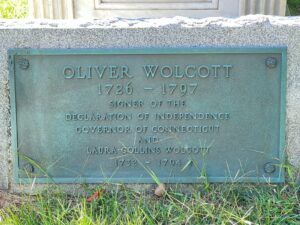
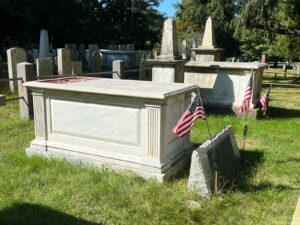
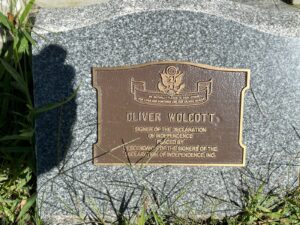
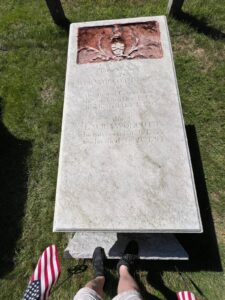
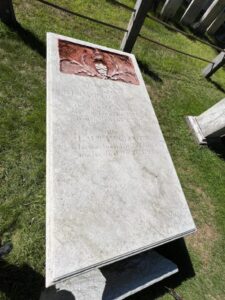
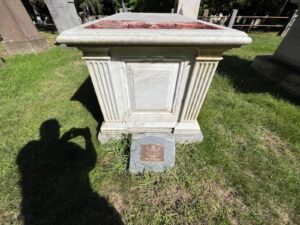
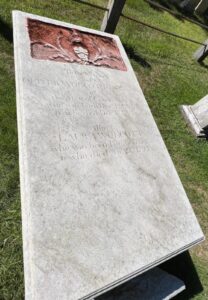
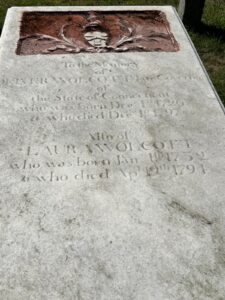
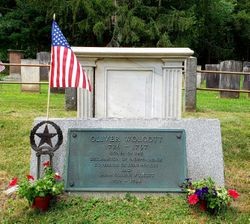
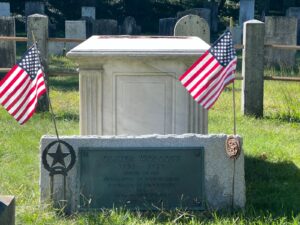
Oliver Wolcott died on December 1, 1797, in Litchfield, Connecticut, at the age of 71. He was buried there, where his grave remains a point of interest for students of American history and visitors following the footsteps of the Founders.
Legacy of Service
Oliver Wolcott’s life reflects the character of many Revolutionary-era leaders:
- A colonial official before the war
- A military officer during the conflict
- A national statesman in Congress
- And a state governor in the early republic
He signed the Declaration of Independence and later supported the new constitutional government, helping guide Connecticut through the turbulent years of the Revolution and nation-building.
Though not always as famous as some of his contemporaries, Wolcott carried an extraordinary number of responsibilities during the Revolutionary era. His combination of military leadership, political service, and administrative skill made him one of Connecticut’s most important founders.

Leave a Reply