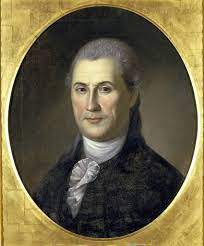
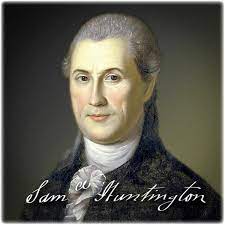
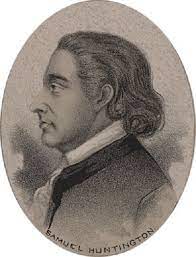
Samuel Huntington
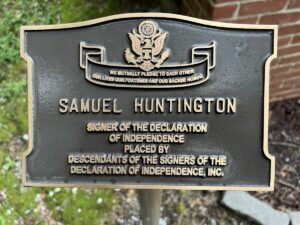
Signer of the Declaration of Independence
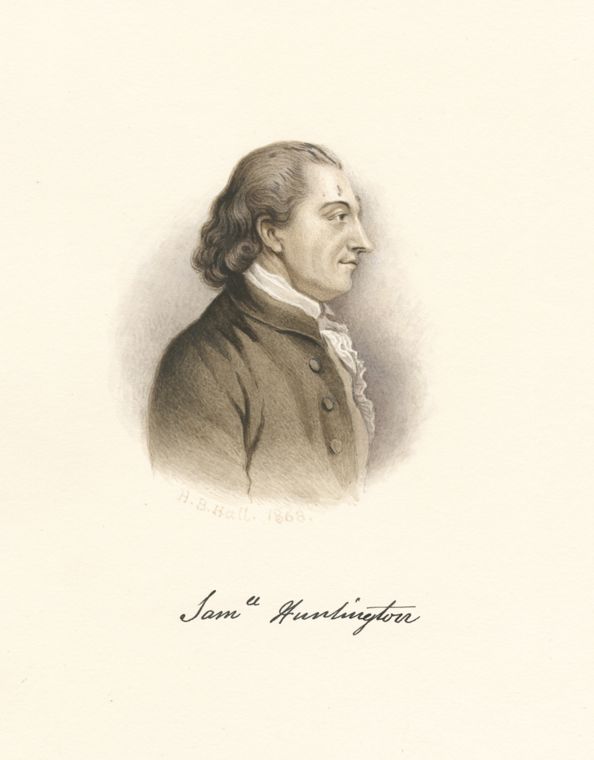
Born: July 5, 1731 – Scotland (Windham), Connecticut
Died: January 5, 1796 – Norwich, Connecticut
Profession: Lawyer, judge, statesman, governor
Notable roles: President of the Continental Congress, Governor of Connecticut
A Quiet but Steady Founder
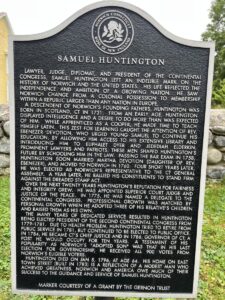
Samuel Huntington may not be as famous as some of the other signers, but his steady leadership and calm judgment made him one of the most dependable figures of the American Revolution. He was not a fiery speaker or political radical. Instead, he was known for quiet competence, strong character, and a deep sense of duty—qualities that earned him the respect of his colleagues and the trust of his state.
Early Life in Rural Connecticut
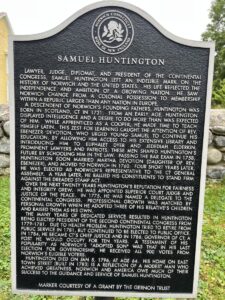
Huntington was born on July 5, 1731, in the small farming town of Scotland in Windham County, Connecticut. He was the fourth of ten children in a modest family. His father was a farmer and clothier, and formal education was limited. Samuel attended the local schools but never went to college.
A Self-Taught Lawyer
Instead, he followed a path that feels very American—he educated himself. As a teenager, he apprenticed as a cooper, making barrels, while also working on the family farm. At the same time, he borrowed books from the local minister and nearby attorneys.
Through determination and long hours of self-study, he learned Latin, history, and the law. By the age of twenty-three, he was admitted to the Connecticut bar, an impressive achievement for someone without a formal education.
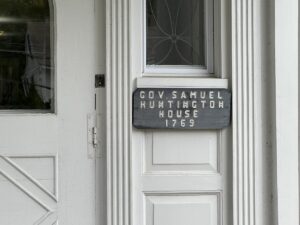
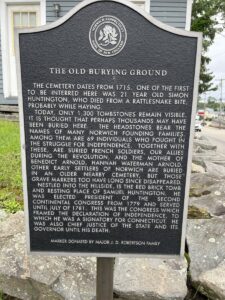
He soon moved to Norwich, Connecticut, where he established a successful law practice.
Marriage and Family
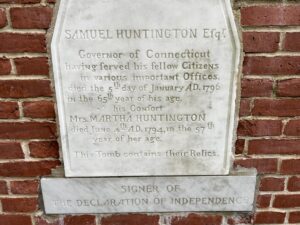
In 1761, Huntington married Martha Devotion, the daughter of the minister who had helped guide his education. The couple had no children of their own but later adopted two of his brother’s children and raised them as their own.
Rise in Public Service
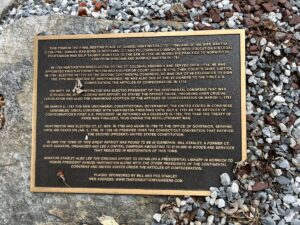
Huntington’s public career began in 1764 when he was elected to represent Norwich in the Connecticut Assembly. He served there for nearly a decade and built a reputation as a careful and thoughtful leader.
During this time, he was also appointed King’s Attorney for the colony and later became a judge on the Connecticut Superior Court.
Joining the Patriot Cause
As tensions with Great Britain grew, Huntington aligned himself with the patriot cause. He opposed the British coercive policies and supported colonial rights.
In October 1775, Connecticut sent him to the Continental Congress as a delegate. He arrived in Philadelphia in January 1776, just months before independence would be declared.
Signing the Declaration of Independence
Huntington voted for independence in July 1776 and signed the Declaration that August. He remained in Congress for several years, serving on important committees and helping manage the war effort. He wasn’t the loudest voice in the room, but he was one of the most reliable.
President of the Continental Congress
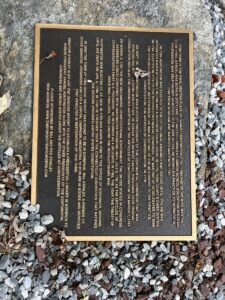
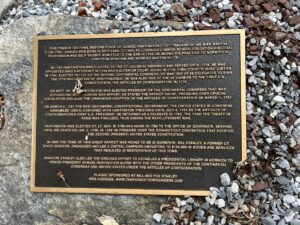
In September 1779, his fellow delegates elected him President of the Continental Congress. During his time in that position, one of the biggest challenges was securing the approval of all 13 states for the Articles of Confederation.
Some states held claims to vast western lands, and others refused to ratify the Articles until those claims were resolved.
Huntington worked to help settle these disputes. Eventually, the states agreed to give up those lands to the national government, and on March 1, 1781, the Articles of Confederation were finally ratified by all thirteen states.
Because he was serving as president at that moment, Huntington became the first “President of the United States in Congress Assembled” under the new system.
Return to Connecticut
Poor health forced him to resign from Congress later in 1781, and he returned home to Connecticut. After the war, his service continued.
He was elected lieutenant governor in 1785 and became governor in 1786. He held that office until his death.
Governor During a New Nation
As governor, Huntington oversaw important developments, including settling land disputes, establishing the state capital at Hartford, and supporting ratification of the United States Constitution.
Under his leadership, Connecticut became the fifth state to ratify the new Constitution.
Death and Legacy
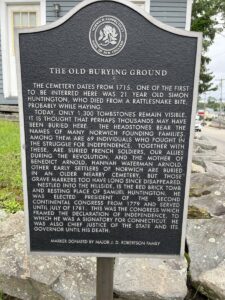
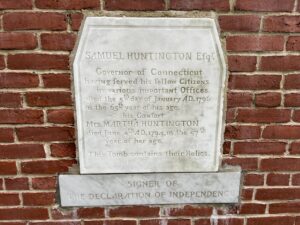
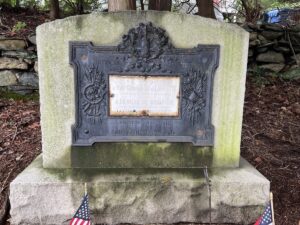
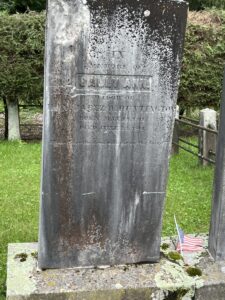
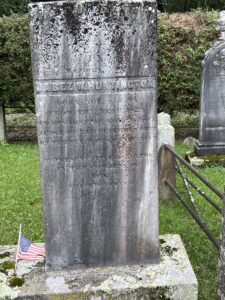
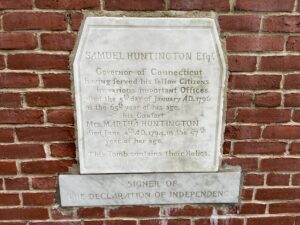
Samuel Huntington died on January 5, 1796, while still serving as governor. He left behind a legacy of steady leadership and faithful service at both the state and national levels.
He may not have been the most famous Founder, but he was one of the most dependable—an essential figure during the nation’s most uncertain years.






























































Leave a Reply