William Williams
Signer of the Declaration of Independence
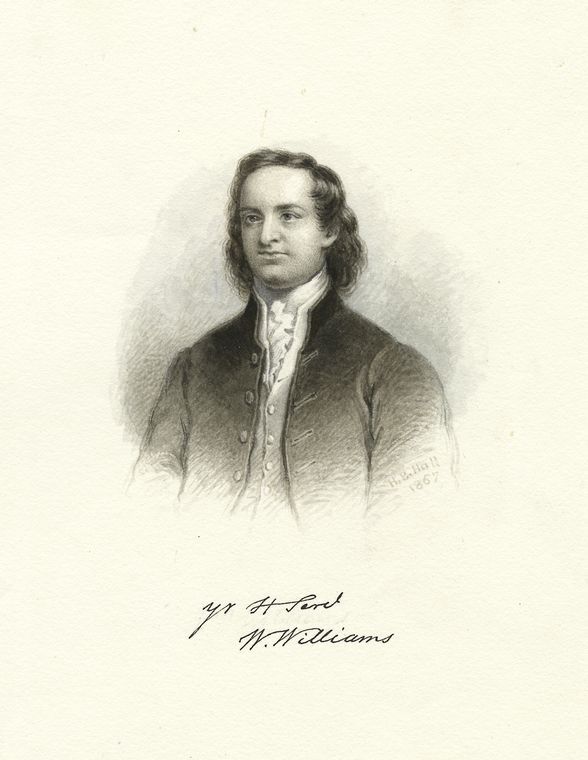
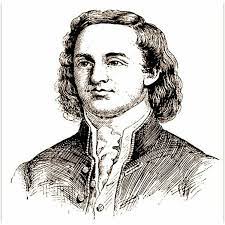
William Williams was not among the most famous of the Founding Fathers, but his life tells the story of the steady, principled men who helped make the American Revolution possible. He was a merchant, a soldier, a judge, and a lifelong public servant. More than anything else, he was a dependable leader who served his town, his colony, and eventually his new nation for decades.
Birth, Family, and Early Life
William Williams was born on April 18, 1731, in Lebanon, Connecticut. He grew up in a profoundly religious, well-educated family. His father, Rev. Solomon Williams, served as the pastor of the local Congregational church for about fifty years. His grandfather had also been a minister, and the family had a long tradition of education and public service.
With that background, it was expected that William would follow the same path. Like his father and grandfather, he attended Harvard College. He entered at just sixteen years old, graduated with honors at twenty, and then began studying theology under his father. At that point, it seemed inevitable he would become a minister.
A Change of Direction: War and Business
History had other plans. The French and Indian War broke out in the 1750s, and Williams joined the colonial forces. He served under his uncle, Colonel Ephraim Williams, in a campaign near Lake George in New York. During a fierce battle in 1755, his uncle was killed.
This experience had a lasting effect on him. He saw how British officers often treated colonial soldiers with arrogance and contempt. That attitude left a bitter impression and helped shape his later support for American independence.
After the war, Williams decided not to pursue the ministry. Instead, he returned home, opened a store in Lebanon, and became a successful merchant. This marked the beginning of his professional life in business and community leadership.
Early Government Service
Williams quickly became involved in public life. At just twenty-five years old, he was elected Town Clerk of Lebanon, a position he would hold for more than forty years. He also served as a selectman from 1760 to 1785.
Soon afterward, he was elected to the Connecticut Assembly, where he would serve for an extraordinary forty-five years. During that time, he held several important positions, including Speaker of the lower house for about two decades.
Later in life, he served as a Judge of the Windham County Court and as Probate Judge for the district. His government service stretched across local, colonial, and state levels, making him one of the most consistently active public servants among the signers.
Marriage into the Trumbull Family
In 1771, at nearly forty years old, Williams married Mary Trumbull, the daughter of Connecticut’s royal governor, Jonathan Trumbull. This was a significant political and social connection.
Governor Trumbull was the only royal governor who openly supported the American Revolution. Through this marriage, Williams became part of one of the most influential families in New England. Mary’s brother, John Trumbull, would later become famous as a painter of the Revolution, including the well-known painting of the signing of the Declaration of Independence.
William and Mary had three children: Solomon, Faith, and William Trumbull Williams.
Support for the American Cause
By the 1760s, Williams had become a strong supporter of colonial rights. He served on committees dealing with significant issues such as the Stamp Act, land disputes, Native American concerns, and colonial boundary conflicts.
He also supported the cause financially and through his writing. Williams used his own money to help the revolutionary effort and wrote persuasive arguments defending the colonies.
From 1773 to 1775, he served as a colonel in the Connecticut militia. In 1775, he went door to door raising money to send Connecticut troops to help capture Fort Ticonderoga. It was a very personal effort that showed his commitment to the cause.
Delegate to the Continental Congress
In June 1776, Williams was appointed as a delegate to the Second Continental Congress, replacing Oliver Wolcott, who had fallen ill.
Because of the timing, he did not arrive in Philadelphia until late July. The debates and the independence vote had already taken place. Still, he was present in August when the formal signing occurred, and he added his name to the Declaration of Independence.
During his time in Congress, Williams wrote letters home describing the tense political and military situation. He expressed strong religious faith and often wrote that he trusted God to guide the American cause. Even after major defeats, he remained hopeful that independence would be achieved.
Personal Sacrifice During the Revolution
Williams backed his words with action. In 1779, he accepted worthless paper money in exchange for $2,000 in gold for military supplies. When questioned, he reportedly said that if independence were won, he would recover his money. If not, the loss would not matter.
In 1781, when news reached Lebanon that Benedict Arnold had attacked nearby New London, Williams mounted his horse and rode more than twenty miles in three hours to offer his services. By the time he arrived, the town was already burning.
Later that year, when a French regiment was stationed in Lebanon, Williams moved out of his own home and gave it over to the French officers. It was another example of his willingness to sacrifice for the cause.
Role in the New Nation
After the war, Williams continued his long career in public service. He was a delegate to the convention that adopted the Articles of Confederation.
In 1788, he served as a delegate to the Connecticut convention that ratified the United States Constitution. He voted in favor of ratification, though he objected to the clause that prohibited religious tests for office, reflecting his strong religious convictions.
In his later years, he focused primarily on his duties as a county judge.
Final Years and Death
Tragedy struck in 1810 when his eldest son, Solomon, died. Williams never seemed to recover from the loss. His health declined, and he passed away less than a year later.
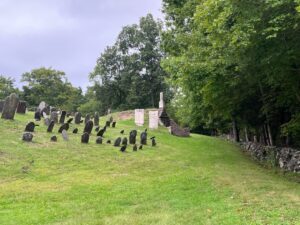
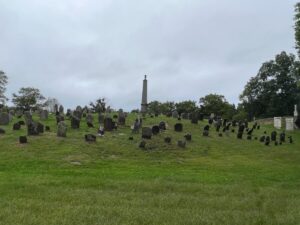
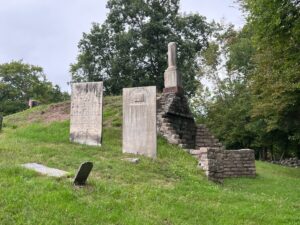
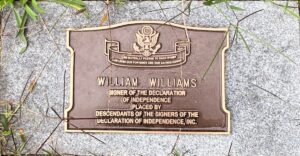
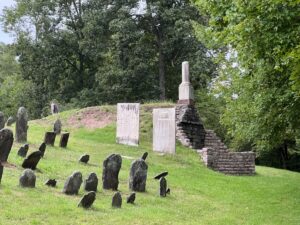
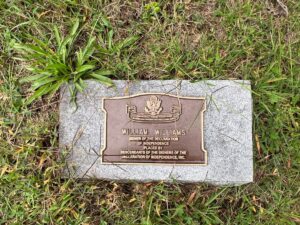
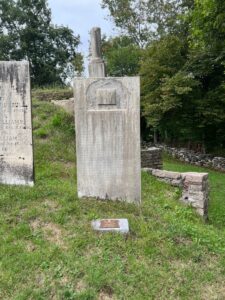
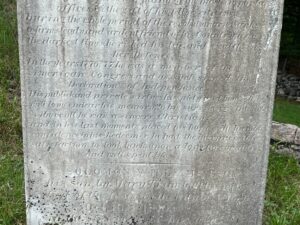
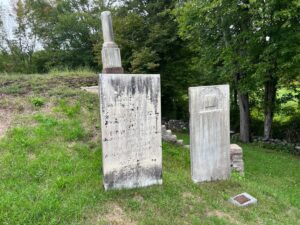
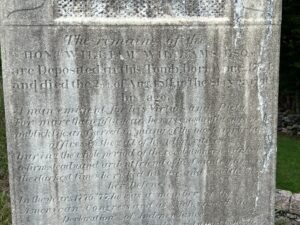
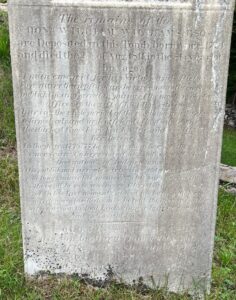
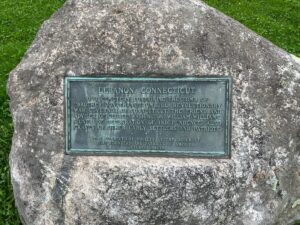
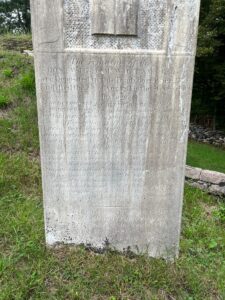
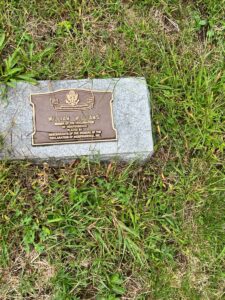
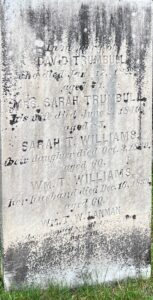
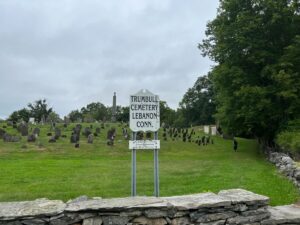
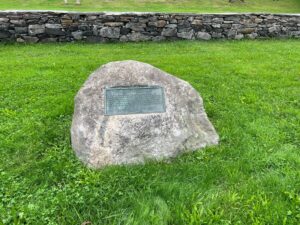
William Williams died on August 2, 1811, at the age of eighty-one. He was buried in the Trumbull Cemetery near Lebanon, Connecticut.
Quick Facts
Born: April 18, 1731 – Lebanon, Connecticut
Died: August 2, 1811 – age 81
Burial: Trumbull Cemetery, Lebanon, Connecticut
Professions:
- Merchant
- Judge
- Public official
Military Service:
- Colonial soldier in the French and Indian War
- Colonel in the Connecticut militia
Government Service:
- Town Clerk of Lebanon (over 40 years)
- Selectman (1760–1785)
- Connecticut Assembly member (45 years)
- Speaker of the lower house (about 20 years)
- Delegate to the Continental Congress (1776)
- Delegate to the conventions adopting the Articles of Confederation and the U.S. Constitution
- County and Probate Judge
Legacy
William Williams may not have been the most famous signer, but he was a practical patriot, merchant, judge, legislator, and community leader. His long life of service, personal sacrifice, and steady leadership helped guide Connecticut through the Revolution and into the early years of the United States.
In the famous painting of the Declaration of Independence by his brother-in-law John Trumbull, Williams stands quietly in the background beside fellow Connecticut signer Oliver Wolcott—a fitting image for a man who served faithfully, even when he wasn’t in the spotlight.




Leave a Reply