Caesar Rodney: Delaware’s Determined Voice for Independence
Birth, Family, and Early Life
Caesar Rodney was born on October 7, 1728, near Dover, Delaware, at his family’s plantation called Byfield. He was the oldest child of Caesar Rodney and Elizabeth Crawford Rodney.
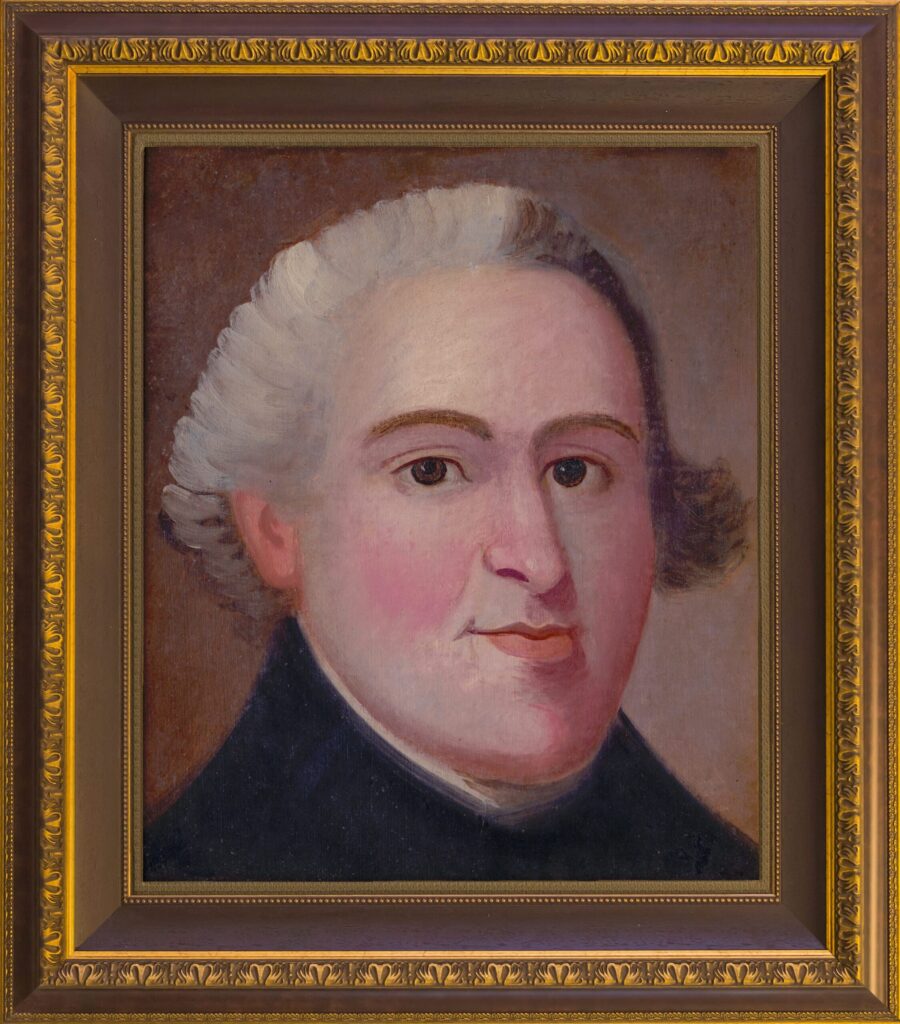
Call Number: MSS 12130
Citation: Robert Edge Pine. Copies of Pine’s Portraits of Signers of the Declaration of Independence,1820, Accession #12130, Albert and Shirley Small Special Collections Library, University of Virginia, Charlottesville, Va.
The Rodney family had lived in Delaware for generations, and Byfield had long been their home. His maternal grandfather, Daniel Jones, settled the property in the early 1680s, and it later became the Rodney family seat.
Rodney’s family had both colonial and English roots. His grandfather, William Rodney, arrived in America around 1681 or 1682, about the same time as William Penn.
On his mother’s side, Caesar was descended from Elizabeth Crawford, whose father, Reverend Thomas Crawford, was an Anglican minister from Scotland and the first missionary sent to Dover by the Society for the Propagation of the Gospel in Foreign Parts.
Caesar was the oldest of eight children, and he took on responsibility early. When his father died in 1745, Caesar was just seventeen. He had to help care for his mother and younger siblings and manage the family plantation. This experience shaped his life, teaching him to make decisions and serve others before he was an adult.
Rodney studied at the Latin School in Philadelphia, which prepared young men for public life. After his father died, Nicholas Ridgely, a well-known citizen of Dover, became his guardian. As Rodney grew up, the colonies were debating issues like liberty, rights, taxation, and representation. These ideas would later shape his life’s work.
A Frail Body, But a Strong Spirit
Caesar Rodney didn’t look like the heroic figure we might picture. There is no known portrait of him, but John Adams described Rodney in his 1774 diary as tall, thin, pale, and “slender as a reed,” but also full of “sense and fire, spirit, wit, and humor.”
Rodney had asthma all his life and later struggled with a painful facial cancer. Medical care in the 1700s was often difficult and costly, but Rodney kept serving his colony and state despite these challenges, and he developed an affection for several Delaware women over the years, but none of those courtships led to marriage.
Rather than withdrawing from life, Rodney poured his energy into public service. In many ways, Delaware became his family, and he spent his strength serving it.
Early Public Service in Delaware
Caesar Rodney started his public career young. At twenty-seven, he became sheriff of Kent County. After that, he held many important positions, and few Delawareans have matched his record.
In 1758, Rodney was elected as a delegate from Kent County to the Colonial Legislature in New Castle. In 1762, he worked with Thomas McKean to revise and print Delaware’s provincial laws. In 1765, he joined the Stamp Act Congress to oppose Parliament’s taxes. In 1769, he was appointed to the Delaware Superior Court.
These positions show Rodney was not just a patriot who appeared when independence was popular. He spent years building trust, learning about government, and serving Delaware. He was already one of the state’s most experienced public figures before the Revolution started.
Rodney and the Question of Liberty
Rodney’s life reflected the contradictions of his era. In 1766, as Speaker of the Assembly, he introduced a bill to stop the importation of enslaved people into Delaware. Yet he lived on a large plantation and owned about 200 enslaved people himself.
It’s difficult to overlook this reality. Like many founders, Rodney spoke and acted for political liberty while living in a society based partly on slavery. The article notes that when he died, Rodney directed that the people he enslaved be freed either right away or soon after. His will called for gradual emancipation.
This doesn’t erase the contradiction, but it shows Rodney struggled with the meaning of liberty both publicly and privately.
Road to Revolution
As tensions with Great Britain increased, Rodney became more involved in the patriot cause. When Parliament closed the Port of Boston, he called a special session of the Delaware Assembly. In 1774, he signed the Articles of Association, which was a colonial agreement to resist British policies using economic pressure.
Rodney, Thomas McKean, and George Read represented Delaware in the First Continental Congress. In 1775, Rodney signed the Olive Branch Petition, which was a final attempt at peaceful reconciliation with King George III. This shows that many founders didn’t rush into independence; they tried protest, negotiation, and reconciliation first.
Rodney wasn’t known as a firebrand. The article describes him as a “cool and considerate man.” He was practical, patient, and thoughtful. But when it was time to decide, he chose independence.
Delaware’s Critical Vote for Independence
The most dramatic moment in Caesar Rodney’s life happened in the summer of 1776.
Delaware had three delegates in the Continental Congress: Caesar Rodney, Thomas McKean, and George Read. On June 7, 1776, Richard Henry Lee of Virginia introduced the resolution that the colonies “are, and of right ought to be free and independent states.” Voting for independence was risky, as Britain could see it as treason. These men were risking their lives, fortunes, and their families’ futures.
The Delaware delegation was split. Thomas McKean supported independence, while George Read opposed it at that time. Rodney was away in Delaware, handling militia and Loyalist issues. Without him, Delaware’s vote was tied.
McKean understood what was at stake and sent a message to Rodney, urging him to come to Philadelphia. Rodney responded right away.
Traditionally, Rodney rode through the night on horseback in a storm to reach Philadelphia in time. Some accounts say he traveled by carriage, as his brother Thomas claimed. Either way, the journey was tough.
Rodney covered about eighty miles in eighteen hours through thunder, rain, mud, and exhaustion. He arrived at Independence Hall on July 2, 1776, wet, tired, ill, and “booted and spurred.”
Then he cast Delaware’s deciding vote for independence.
That moment secured Delaware’s support for the Lee Resolution and helped move the colonies toward the Declaration of Independence.
Rodney later wrote to his brother Thomas that he arrived in Congress, despite delays from thunder and rain, “time enough to give my voice in the matter of independence.”
Shortly afterward, Caesar Rodney joined Thomas McKean and George Read in signing the Declaration of Independence.
Service During the Revolutionary War
Rodney’s service continued after his famous vote. During the Revolutionary War, he served as a Brigadier General and later as a Major General in the Delaware Militia. He helped raise and supply troops for General George Washington, especially in New Jersey.
Sometimes, Delaware’s government couldn’t respond fast enough to military needs. Rodney bought supplies for troops with his own money. George Washington wrote letters praising Rodney’s efforts, and their correspondence shows mutual respect.
Delaware was hard to govern during the war. Loyalist support was strong, especially in Kent County. British ships entered Delaware waters looking for food, information, and men for naval service.
British forces invaded and occupied parts of northern Delaware, and Rodney had to command troops in the field for a short time at Washington’s request.
Despite all these challenges, Rodney kept working even as his health got worse.
President of Delaware
In 1778, Caesar Rodney was elected President of Delaware, which was the title before the office became known as governor. He served for three years and then for another seven months. His presidency was during one of the most chaotic and financially difficult times in Delaware’s history.
A major issue during his administration was ratifying the Articles of Confederation. The process took over a year and caused real conflict in the Delaware Assembly. Rodney had to handle political division, war needs, finances, military pressure, and his own declining health.
He was later reappointed to the Continental Congress and the Delaware Assembly, but never served in either role because his health failed. The article suggests he may have ruined himself financially through public service. Caesar Rodney gave not only his time and energy, but likely much of his personal wealth to the cause.
Death and Burial
Caesar Rodney died on June 26, 1784, near Dover, Delaware. He was fifty-six years old. His death came less than a year after the signing of the Treaty of Paris on September 3, 1783, which officially ended the Revolutionary War.


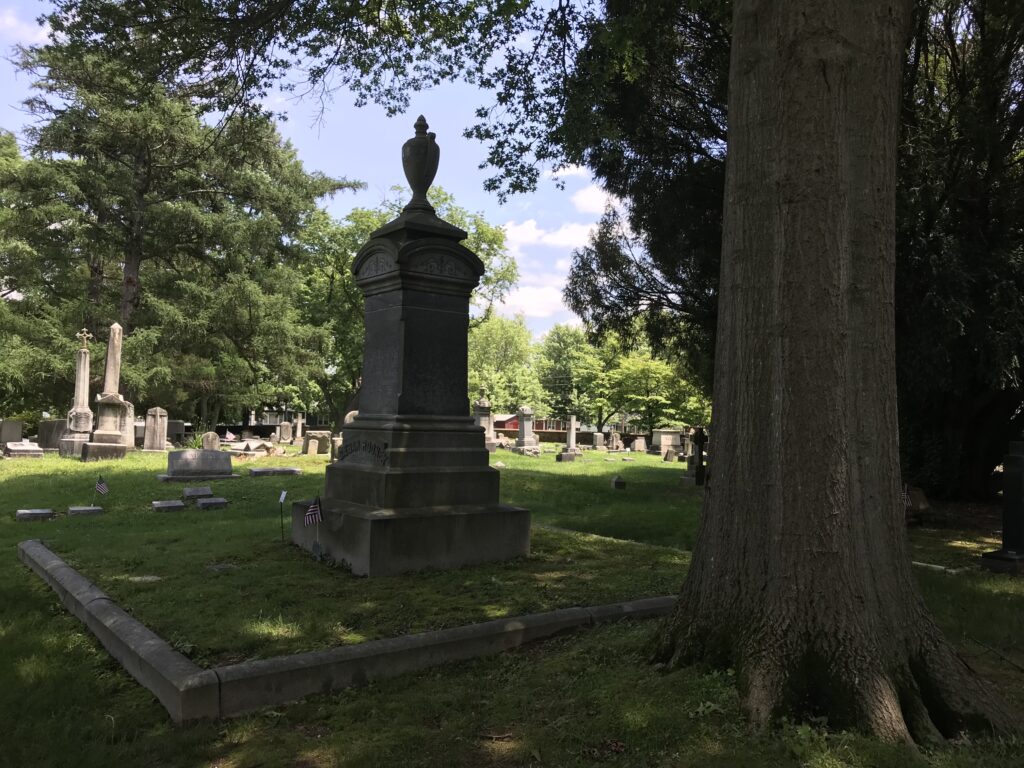
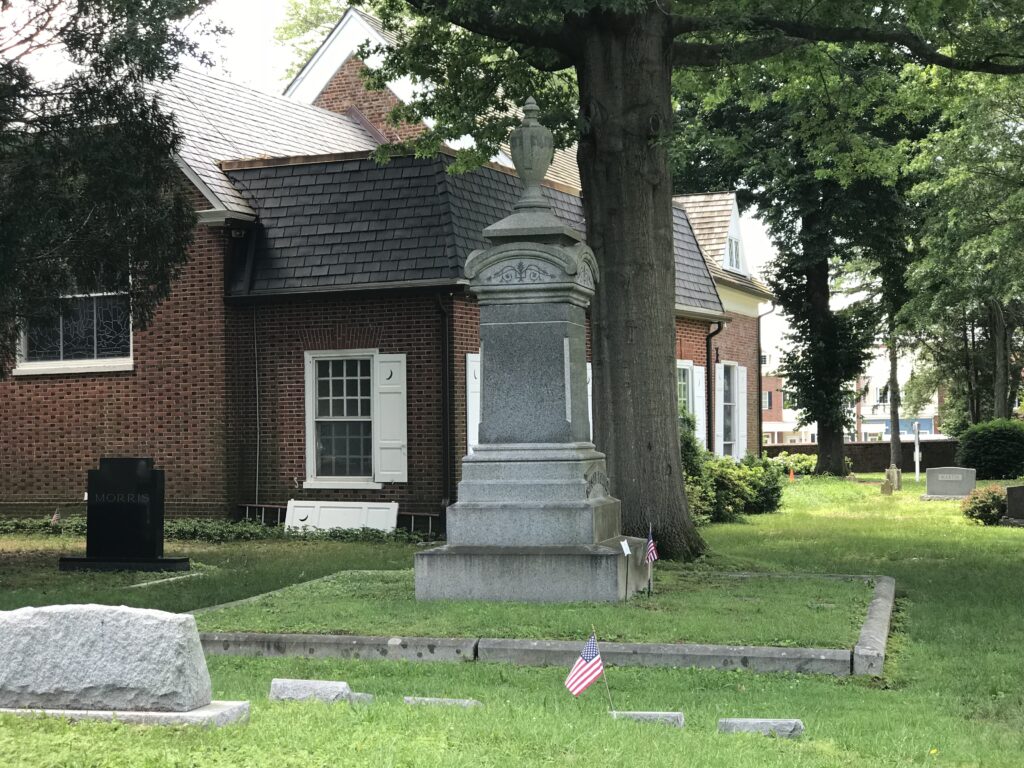
There is a debate about Rodney’s burial location. Some believe his remains were moved in 1888 to Christ Episcopal Churchyard, where a large granite monument was built by the National Society of the Sons of the American Revolution. Others think his remains are still on private land near the old Byfield plantation, where the state placed a marker east of Dover Air Base.
Visiting Rodney’s memorial isn’t just about standing at a grave. It’s about remembering a man whose exact resting place may be unknown, but whose place in American history is certain.
Legacy of Caesar Rodney
Caesar Rodney is remembered as one of Delaware’s great patriots, and for good reason. His life was not easy. He faced sickness, pain, political opposition, war, and financial strain, but he kept serving.
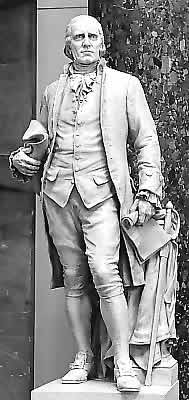
Delaware has honored Rodney in many ways. His name is on a granite block at the memorial to the signers of the Declaration of Independence near the Washington Monument in Washington, D.C. In 1934, a statue of Rodney was placed in the U.S. Capitol’s Statuary Hall. An equestrian statue in Rodney Square in Wilmington celebrates his famous ride, and his image on horseback appeared on Delaware’s state quarter. * Schools, dormitories, and marathons have also carried his name.
- Note: in 2020 Rodney’s equestrian statue was removed and placed in a warehouse, due to social issues at that time. For the Two-Hundred-fiftyth anniversary of the signing of the Declaration of Independence, the equestrian statue of of Rodney is being shipped to Washington, DC for the festivities.
Leave a Reply