Edward Rutledge
(1749 – 1800)
Early Life and Family Roots
Edward Rutledge was born on November 23, 1749, in Charleston, South Carolina, into a prominent and well-established family. He was the youngest son of Dr. John Rutledge, an Irish immigrant who had come to South Carolina around 1735. The Rutledge family traced its roots back to Ireland, specifically to Thomas Rutledge of County Kilkenny, giving Edward both colonial opportunity and Old World heritage.
His mother, Sarah Hert, came from a wealthy and respected background. She inherited significant property, including plantations and homes in Charleston, which added both status and financial stability to the family. Her lineage connected the Rutledges to influential English settlers, further strengthening their place among South Carolina’s colonial elite.
Growing up in this environment, Edward was surrounded by education, opportunity, and political influence. While not considered an exceptional student early on, he showed promise—especially in communication and public speaking, skills that would later define his career.
Education and Legal Training
Edward’s education began under a tutor who instructed him in classical languages, a common path for young men of his social standing. He later studied law under his older brother, John Rutledge, who was already an accomplished attorney and would go on to become one of the most influential figures of the Revolutionary era.
At the age of twenty, Edward traveled to England to further his legal education at the Inner Temple in London—one of the most prestigious legal institutions of the time. There, he was exposed to some of the greatest orators in British courts and Parliament. This experience had a lasting impact, sharpening his rhetorical skills and shaping him into one of the more polished speakers of his generation.
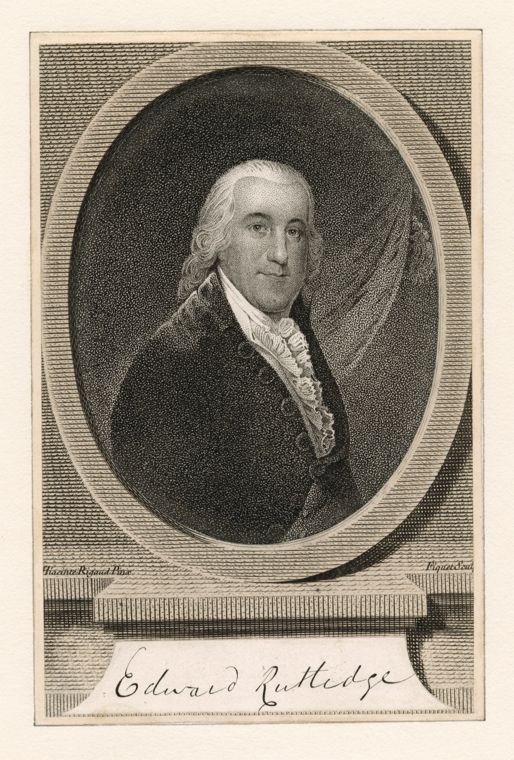
He returned to Charleston in 1773 and quickly established himself as a capable and rising young lawyer.
Marriage and Personal Life
Shortly after beginning his legal career, Edward married Henrietta Middleton, the sister of fellow Declaration signer Arthur Middleton. This marriage tied him directly into one of South Carolina’s most influential political families.
Together, Edward and Henrietta had three children—one son, one daughter, and another child who died in infancy.
After Henrietta’s death in 1792, Edward remarried Mary Shubrick Eveleigh, a widow. This second marriage further connected him to the network of Revolutionary leaders, as her sisters were married to signers Thomas Heyward, Jr., and Thomas Lynch, Jr.
These interwoven family relationships highlight how closely connected the leadership of the Revolution truly was—especially among South Carolina’s elite.
Rise to Political Prominence
Edward Rutledge’s political career began early. Despite his youth, he was elected to both the Continental Congress and the South Carolina House of Representatives. His confidence and speaking ability quickly earned him respect among his peers.
Initially, Rutledge was not a strong supporter of immediate independence. In fact, during the debates in June 1776, he actively opposed Richard Henry Lee’s resolution for independence, arguing that the colonies were not yet ready for such a step.
However, this is where his leadership became especially significant. After a preliminary vote showed South Carolina opposing independence, Rutledge requested a delay. That evening, he worked behind the scenes to persuade his fellow delegates to change their position. The following day, South Carolina voted in favor of helping make the decision for independence unanimous among the colonies (with New York abstaining).
At just 26 years old, Edward Rutledge became the youngest signer of the Declaration of Independence.
Revolutionary War Contributions
Rutledge continued serving in Congress and contributed to the broader effort to establish a new nation. He was appointed to the committee drafting the Articles of Confederation, though he expressed concerns about granting too much power to a central government—reflecting his strong belief in states’ rights.
In September 1776, he joined John Adams and Benjamin Franklin in a diplomatic meeting with British Admiral Lord Howe on Staten Island. While the meeting was cordial, it produced no meaningful results.
Later, Rutledge took on a military role. He served as a lieutenant colonel in the Charleston Battalion of Artillery and fought in defense of South Carolina. In 1780, during the British siege of Charleston, he was captured along with fellow signers Thomas Heyward, Jr., and Arthur Middleton.
He was held prisoner for nearly a year before being exchanged in 1781, after which he made a long journey back home.
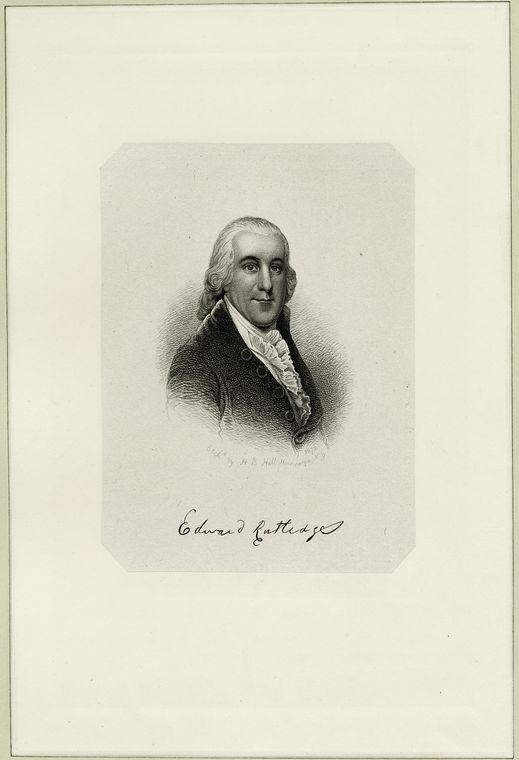
Post-War Career and Public Service
After the war, Rutledge resumed his political career and remained active in public service for many years. He served in the South Carolina legislature from 1782 to 1798, where he helped shape state policy.
He supported the ratification of the U.S. Constitution and worked on reforms such as abolishing primogeniture (the practice of passing all property to the eldest son), helping create a more equitable system of inheritance.
Interestingly, despite his wealth being tied to plantation labor, Rutledge opposed reopening the African slave trade—revealing a complex and sometimes contradictory stance on issues of the time.
His success extended beyond politics. His law practice flourished, and he invested in plantations alongside his brother-in-law Charles C. Pinckney, increasing his family’s wealth and influence.
In 1794, President George Washington offered him a seat on the U.S. Supreme Court, which he declined.
In 1798, Rutledge was elected Governor of South Carolina, one of the highest honors of his career.
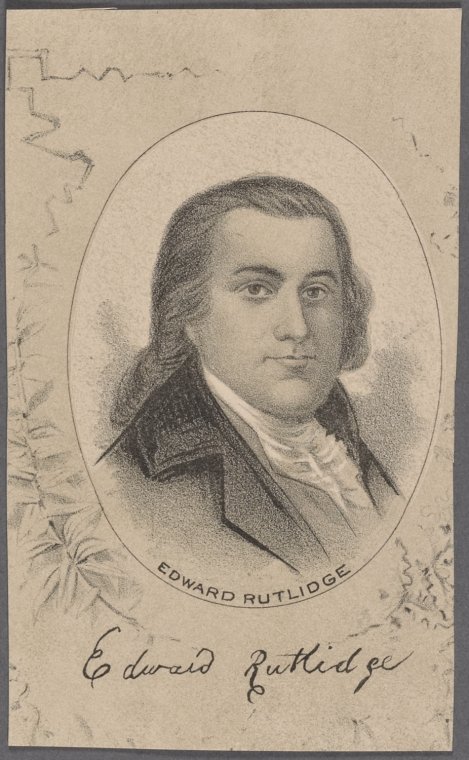
Personality and Reputation
Edward Rutledge was widely recognized as an exceptional orator. His speaking style was described as smooth, persuasive, and engaging—less forceful than Patrick Henry’s, but equally compelling in its own way.
Opinions about him varied. John Adams famously criticized him as overly concerned with minor details, while others, including Benjamin Rush and Patrick Henry, praised his intelligence and eloquence.
By most accounts, he was a charming and charismatic individual who combined intellect with a polished public presence.
Death and Burial
Edward Rutledge died on January 23, 1800, in Charleston, South Carolina, while still serving as governor. His death marked the end of a life deeply intertwined with the nation’s founding.
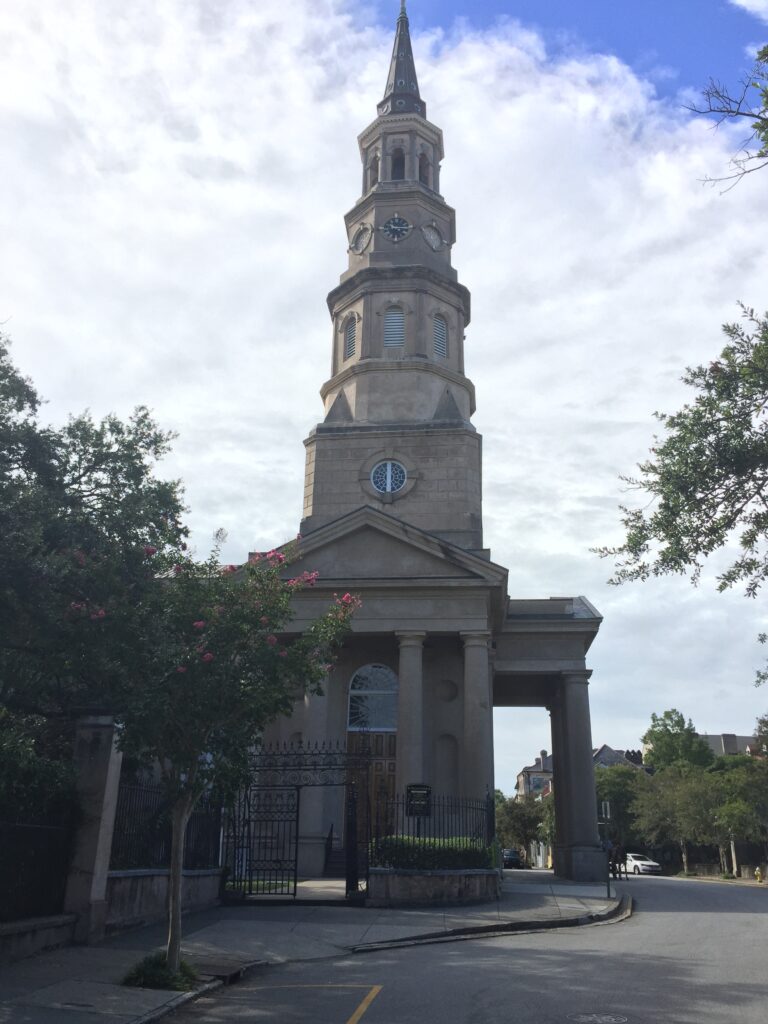
He was buried in St. Philip’s Churchyard Cemetery in Charleston, where he remains today. His passing was widely mourned, and he was honored with significant military and civic ceremonies.


Legacy
Edward Rutledge holds a unique place in American history as the youngest signer of the Declaration of Independence. His journey—from cautious opponent of independence to a key figure ensuring unanimity—highlights both the complexity and the unity that defined the founding generation.
His life reflects the broader story of the American Revolution: a blend of ambition, debate, sacrifice, and ultimately, commitment to a new nation.
Today, his legacy lives on not only in historical records but also in Charleston, where his home still stands, and his final resting place continues to be visited by those interested in America’s founding story.
Leave a Reply