Thomas Nelson Jr.: Signer, Soldier, Governor, and Sacrificial Patriot
Born: December 26, 1738 — Yorktown, Virginia
Died: January 4, 1789 — Hanover County, Virginia
Buried: Grace Churchyard, Yorktown, Virginia
Thomas Nelson Jr. was one of those Founding Fathers whose life reminds us that the American Revolution was not just fought with speeches and signatures. It was fought with personal sacrifice, family risk, financial loss, and physical hardship.
He signed the Declaration of Independence, served in the Continental Congress, led Virginia troops in the field, became governor of Virginia during one of the most dangerous moments of the war, and spent much of his personal fortune supporting the Revolutionary cause. By the time the war ended, Nelson had helped win American independence, but it cost him dearly.
His story begins in Yorktown, Virginia, the very place that would later become one of the most important battlefields in American history.
Early Life in Yorktown
Thomas Nelson Jr. was born on December 26, 1738, in Yorktown, Virginia. He was the son of William Nelson and Elizabeth Burwell. He became known as “Junior” because his uncle, also named Thomas Nelson, lived in Yorktown. Nelson came from one of Virginia’s most prominent families, with connections through the Nelson, Burwell, Carter, Reade, and Randolph families.
His grandfather, Thomas Nelson, was often called “Scotch Tom.” He was born near the Scottish border in Penrith, England, and eventually came to America. Scotch Tom became a successful merchant and helped establish the Nelson family’s position in Virginia society. Around 1740, he built the Nelson House in Yorktown, which still stands today as a National Historic Landmark. That home would later be associated with Thomas Nelson Jr. during the Revolutionary War.
Nelson grew up in a world of wealth, influence, and responsibility. His family expected him to be educated, cultured, and ready for leadership. Like many young men from elite Virginia families, his education began close to home before continuing overseas.
Education in England
Thomas Nelson Jr. received his early education from Reverend Yates of Gloucester County. In 1753, when he was still a teenager, his family sent him to England for further schooling. He attended Eton, one of England’s most famous schools, and later studied at Christ’s College, Cambridge. He completed his education there in 1761.
After years away, Nelson returned to Virginia at about age 23 and entered the family mercantile business. Even before he had fully settled back into life at home, public service called. While he was still aboard the ship returning to Virginia, voters elected him to the House of Burgesses.
Marriage and Family
On July 29, 1762, Thomas Nelson Jr. married Lucy Grymes. Together they had 13 children, though two died in infancy. Lucy also came from a powerful Virginia family. Through her Randolph connections, she was related to several major figures of the founding generation, including Peyton Randolph, Benjamin Harrison, Carter Braxton, the Lee brothers, and Thomas Jefferson.
In colonial Virginia, family ties often shaped politics, business, and public life. Nelson stood in the middle of that world. But when the conflict with Great Britain intensified, he did not simply protect his wealth and status. He put both on the line.
A Patriot as the Crisis Builds
Thomas Nelson Jr. came of age just as the relationship between Britain and the American colonies began to break apart. The colonies had grown frustrated with British taxation, trade restrictions, and policies imposed without colonial consent.
In 1774, Lord Dunmore dissolved the Virginia House of Burgesses after its members condemned the closing of the Port of Boston. That British punishment against Massachusetts angered many Virginians, including Nelson. He responded not just with words, but with action. He used his personal fortune to send supplies to Boston and even helped organize a Yorktown version of the famous Tea Party. According to the article, Nelson personally threw two half-chests of tea into the York River.
That moment says a lot about him. Nelson was wealthy, educated in England, and connected to the British colonial system. Yet when he believed British policy violated American rights, he chose the Patriot cause.
The Road to Independence
In August 1774, Nelson represented York County at the first Virginia Convention in Williamsburg. As tensions approached war, he became active in the debate over military preparations. In July 1775, he was appointed colonel of the Second Virginia Infantry Regiment.
By 1776, events moved quickly. Nelson was elected to Virginia’s House of Delegates, and on May 14, 1776, he presented a powerful resolution calling for Virginia’s delegates in Congress to seek “an immediate, clear and full declaration of independency.” Patrick Henry seconded the motion, and Virginia adopted it.
This was a major step toward American independence. Nelson then carried that instruction with him to the Second Continental Congress, where he replaced Patrick Henry. The Virginia resolution helped authorize Richard Henry Lee to make his famous June 7, 1776, motion calling for independence from Great Britain.
So when we talk about Thomas Nelson Jr. and the Declaration of Independence, we should not think of him only as a man who arrived in Philadelphia and signed a document. He helped push Virginia toward independence before Congress took the final vote.
Signing the Declaration of Independence
Thomas Nelson Jr. faced a difficult choice in 1776. He had been appointed a colonel in Virginia’s military forces, but he resigned his commission so he could serve in Congress. In Philadelphia, he voted for independence and signed the Declaration of Independence.
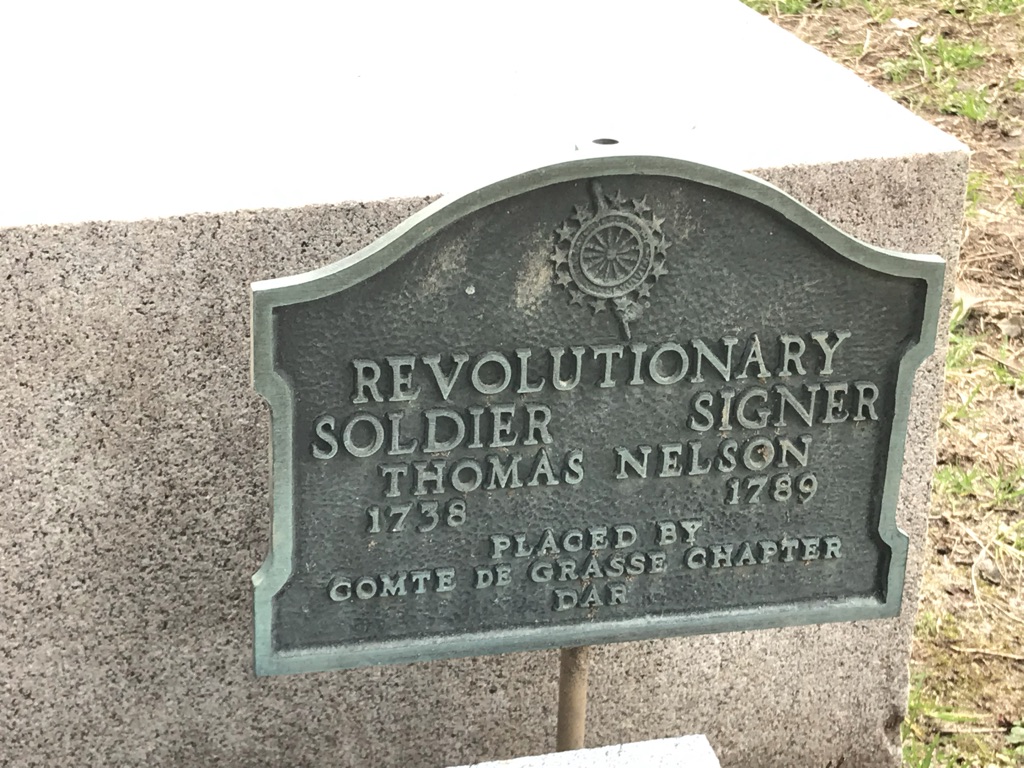
By signing, Nelson joined the other men who publicly committed themselves to the American cause. This was not symbolic in the harmless sense. It was a dangerous act. The signers were declaring rebellion against the world’s most powerful empire. If the Revolution failed, they could lose their property, their freedom, and possibly their lives.
Nelson continued serving in Congress, but poor health soon interfered. In May 1777, a severe asthma attack forced him to resign and return to Virginia. Once his health improved, he again served the cause, this time in the field with the Virginia militia.
Soldier and Governor of Virginia
By 1781, Virginia had become a central battlefield in the Revolutionary War. British forces moved through the state, and the Virginia government itself had to flee. The legislature moved west across the Blue Ridge Mountains and reconvened in Staunton.
At that dangerous moment, Thomas Nelson Jr. was leading Virginia militia forces that had joined the Marquis de Lafayette. On June 12, 1781, the Virginia Assembly elected Nelson as the state’s third governor. He received the news while in camp on the South Anna River and arrived in Staunton on June 18. The next day, he was sworn in as governor.
Nelson now carried two heavy burdens at once. He served as governor of Virginia and as a military commander. This was no ceremonial office. The war was on Virginia soil. British troops threatened the state. Supplies were scarce. The militia needed organization, equipment, and money.
Nelson used his own resources to support the war effort. He helped organize and supply Virginia militia forces, often at his own expense. This personal sacrifice would later contribute to the financial ruin of his family.
Yorktown and the Final Campaign
In the fall of 1781, American and French forces closed in on General Cornwallis at Yorktown. Cornwallis had moved his army there, expecting evacuation or support by sea. But when the French fleet arrived and blocked the British escape, Cornwallis was trapped.
Thomas Nelson Jr. led the Virginia militia during the siege of Yorktown. This is where one of the most famous stories about him appears. According to legend, when British officers occupied his house, Nelson ordered American artillery to fire on it and offered a reward to the first gunner who hit the building.
It is a powerful story, but the article notes that it is likely apocryphal. The Nelson House still stands with cannonballs in its walls, but those cannonballs were placed there by the National Park Service. The article also notes that the home destroyed during the fighting was likely his uncle, Secretary Thomas Nelson’s, not Thomas Nelson Jr.’s own house.
Even if the cannonball story is more legend than fact, the larger truth remains. Nelson was deeply involved in the Yorktown campaign. He placed his fortune, health, and family legacy in service to independence. Yorktown became the great turning point of the war, and Nelson stood close to the center of that final American victory.
Financial Sacrifice and Declining Health
The war took a terrible toll on Thomas Nelson Jr. He spent much of his personal fortune raising funds, supporting militia forces, and covering war expenses. Much of that money was never repaid.
By November 1781, illness forced him to resign as governor. Benjamin Harrison, another signer of the Declaration of Independence, replaced him. Nelson’s health never fully recovered from the strain of wartime service. Years of asthma, military campaigning, stress, and financial hardship weakened him.
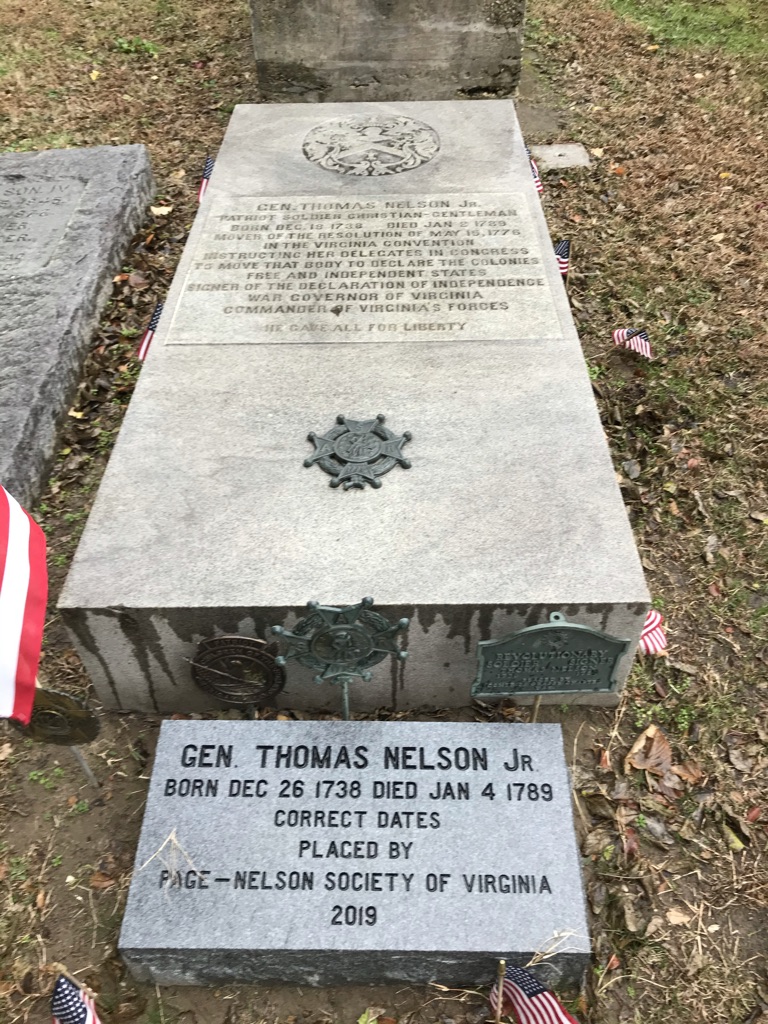
He died on January 4, 1789, while visiting his son’s home, Mont Air, in Hanover County, Virginia. He was only 50 years old. He was first buried nearby and later reinterred at Grace Churchyard in Yorktown. His wife, Lucy, was buried in Hanover County at Fork Church Cemetery.
One of the most moving accounts of Nelson’s death came from his friend, Dr. Smith. He described Nelson as a man whose “patriotic exertions” had exhausted his fortune, leaving him facing the possibility of poverty with a wife and many children. Dr. Smith believed the distress of Nelson’s mind helped destroy his body.
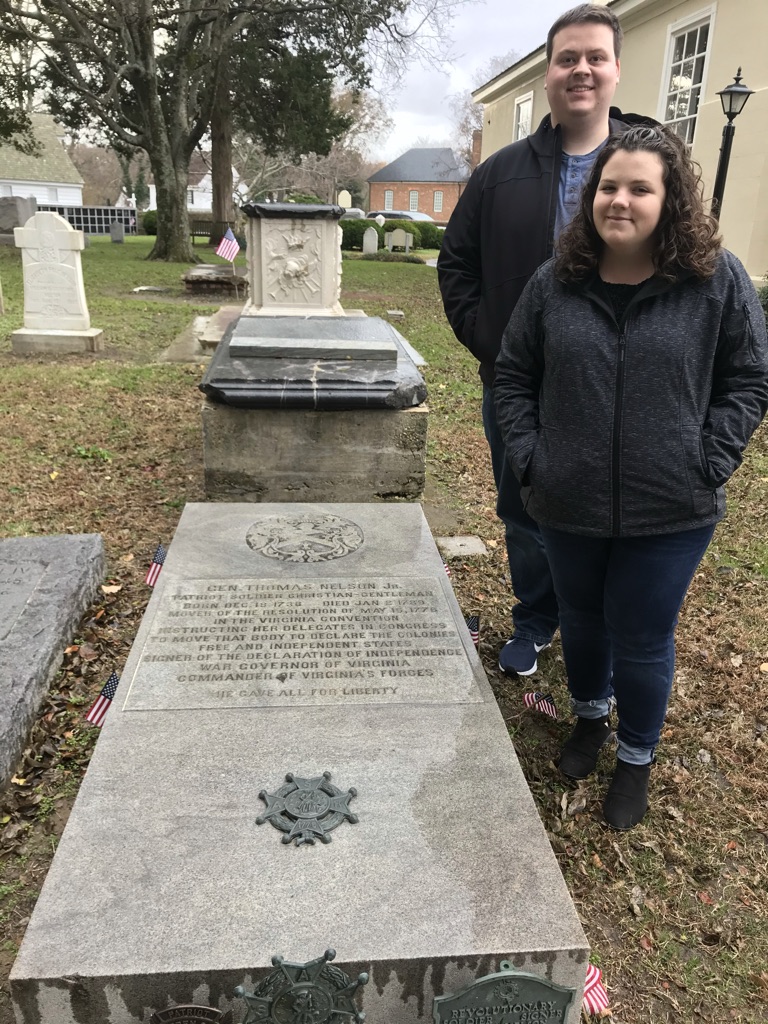
That is a sobering reminder. Nelson did not simply give speeches about liberty. He paid for it personally.
Legacy and Remembrance
Thomas Nelson Jr. deserves to be remembered as more than a name on the Declaration of Independence. He helped move Virginia toward independence, voted for the Declaration, signed it, led militia forces, served as governor during a crisis, and sacrificed much of his fortune to help win the war.
His legacy lives on in several places. Nelson County, Virginia, and Nelson County, Kentucky, were named in his honor. In Richmond, Virginia, his statue stands on the Washington Equestrian Monument on Capitol Square, alongside figures such as Thomas Jefferson, John Marshall, George Mason, Patrick Henry, and Andrew Lewis.


For those visiting Yorktown today, Thomas Nelson Jr.’s story adds another layer to the place. Yorktown is not only where Cornwallis surrendered. It was also Nelson’s hometown, the place of his family’s house, and the community where his memory still rests. His grave in Grace Churchyard connects visitors not just to the victory at Yorktown, but also to the sacrifice behind it.
Final Thoughts
Thomas Nelson Jr. lived a short but remarkable life. Born into wealth and influence, he could have chosen comfort and caution. Instead, he chose resistance, independence, and public service.
He helped push Virginia toward a full declaration of independence. He signed the Declaration in Philadelphia. He fought through illness, served in Congress, led militia, governed Virginia in wartime, and supported the Revolution with his own money. By the end, he had given so much that his health and fortune were broken.
His story reminds us that independence was neither inevitable nor cheap. Men like Thomas Nelson Jr. paid a real price for it. And because of that, his name deserves to be remembered with honor among the signers of the Declaration of Independence.
Leave a Reply