John Hart: The Honest Jersey Farmer Who Signed the Declaration of Independence
Birth and Death
John Hart was likely born in 1713 in Hopewell Township, New Jersey, although the exact date of his birth is unknown. Some older stories claimed he or his father came from Stonington, Connecticut, but records do not support that account. Since his parents lived in Hopewell and John was baptized there, most biographers place his birth there as well.
Hart died on May 11, 1779, at his home in Hopewell, New Jersey, after suffering from kidney stones. He was about 66 years old.
Early Life and Family Background
John Hart came from a practical, hardworking family. His grandfather, also named John Hart, was a carpenter from Newtown, Long Island. His father, Edward Hart, settled in Hopewell around 1710, when he was about twenty years old. Edward became a farmer, a Justice of the Peace, and a public assessor, indicating that the Hart family held a respected place in the community.
John grew up in a world where formal education was limited, especially for farming families. He learned to read, write, and do basic arithmetic, but he did not receive the kind of advanced schooling that some of the other Founders enjoyed. Even so, he developed strong common sense, a working knowledge of the law, and enough business skill to become one of the leading men in Hopewell.
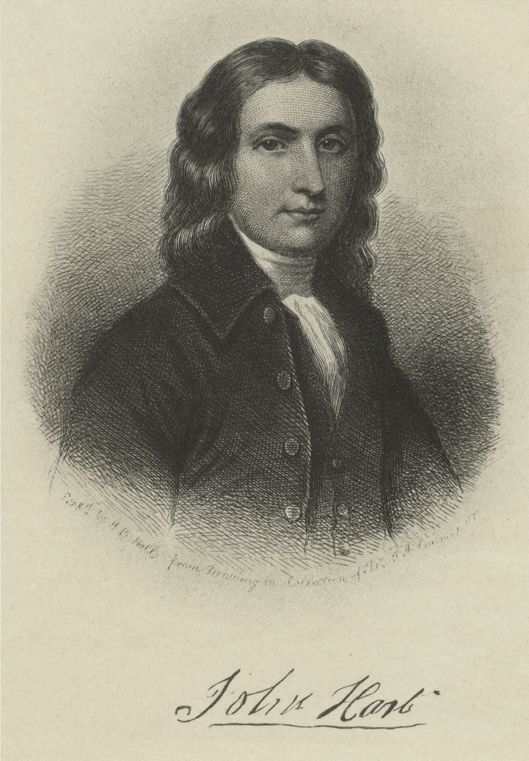
He was described as a well-proportioned man of medium height, with black hair and light eyes. In his younger years, people considered him handsome. But what really stood out was not his appearance. It was his reputation. Hart became known as a man of honesty, good judgment, and steady character. In time, people would call him “Honest John.”
Marriage to Deborah Scudder
In 1739, John Hart married Deborah Scudder, the daughter of Richard Scudder of Scudder Falls. Their courtship gives us a personal glimpse into Hart’s life. He reportedly rode his horse about 30 miles round-trip to visit Deborah before they married.
John and Deborah built a large family together. They had 13 children: Sara, Jesse, Martha, Nathaniel, John, Susannah, Mary, Abigail, Edward, Scudder, a daughter who died young, Daniel, and Debra. Their youngest, Debra, was born when Deborah was 44.
Like many colonial families, the Harts lived in a world where family, land, faith, and community were intertwined. Their children grew up during one of the most turbulent periods in American history. By the time the Revolution arrived, John Hart was not a young man seeking adventure. He was a husband, father, grandfather, landowner, and public servant with much to lose.
Farmer, Businessman, and Landowner
John Hart began buying property in 1740, when he purchased a 193-acre homestead plantation in Hopewell Township. Over the years, he expanded his holdings. In 1751, he and his brother purchased Daniel Hart’s Mill. By the 1770s, Hart had become the largest landowner in Hopewell, owning more than 600 acres.
He also bought a substantial mill enterprise in Rocky Hill with his son-in-law, John Polhemus, who later served as a captain in the militia and Continental Army.
Hart’s plantation included cattle, sheep, swine, horses, fowl, and other farm activities common to a prosperous colonial property. The article also notes that Hart owned four enslaved people, which places him within the complicated and often uncomfortable realities of the colonial era. Like many founders, his life included both public virtue and the moral contradictions of his time.
The original stone portion of his home still stands on Hart Avenue in Hopewell, New Jersey, and part of the original small barn remains on the privately owned property. For anyone interested in visiting the places connected to the signers, that kind of surviving structure makes Hart’s story feel much closer and more real.
Early Public Service
John Hart’s public career began in 1750, when voters elected him to the Hunterdon County Board of Chosen Freeholders. This was the beginning of nearly 29 years of public service. During those years, Hart traveled thousands of miles on horseback to fulfill his duties, often for very little pay.
In 1755, he became a Justice of the Peace. That position gave him standing in the community, and from then on, he could be addressed as John Hart, Esquire.
From 1761 to 1771, Hart served in the Colonial Assembly, representing Hunterdon, Morris, and Sussex counties. During this period, he met Abraham Clark, who would later stand beside him in history as another New Jersey signer of the Declaration of Independence.
Hart also served on the Court of Common Pleas beginning in 1768. By the early 1770s, he had become an experienced public man. He knew local government, colonial law, taxation, public finance, and the concerns of ordinary New Jersey residents.
He was not a polished aristocrat. He was not a fiery intellectual. He was a farmer-politician with a practical mind and a trusted name.
The Road Toward Revolution
As tensions with Great Britain grew, John Hart moved steadily toward the Patriot cause.
In 1774, he helped select delegates to the First Continental Congress and participated in protests against the Tea Act. In 1775, he served on the New Jersey Committee of Correspondence, which helped keep communication open among the colonies. He also served on the Committee of Safety, which acted for the welfare of the colony when the Provincial Congress was not in session.
By 1776, Hart was serving in the New Jersey Provincial Congress. That same year, he was chosen to sign New Jersey’s new Bill of Credit Notes, the state’s paper money. Hart personally signed 25,000 notes.
That detail says a lot about the trust people placed in him. In an age when paper money depended heavily on public confidence, the signature of “Honest John” meant something.
John Hart and the Declaration of Independence
In June 1776, New Jersey selected five delegates to the Second Continental Congress and gave them authority to vote for independence. Those five men were John Hart, Abraham Clark, Francis Hopkinson, Richard Stockton, and John Witherspoon.
When Hart arrived in Philadelphia, he strongly supported independence. He understood the risk. Signing the Declaration was not a symbolic act without consequences. It was a public break with the British Crown. If the Revolution failed, the signers could have been treated as traitors.
Hart became the thirteenth delegate to sign the Declaration of Independence. In doing so, he joined the other signers in pledging his life, his fortune, and his sacred honor.
What makes Hart’s story so compelling is that he did not sign as a young radical with little to lose. He signed as an older man with land, business interests, children, grandchildren, and a respected life in New Jersey. He had built something. Yet he risked it all for independence.
That is why John Hart’s name deserves more attention. He may not be as famous as Jefferson, Adams, or Franklin, but he represented the kind of steady, local leadership the Revolution needed. The cause of independence did not succeed only because of great speeches and famous documents. It succeeded because men like John Hart committed their homes, reputations, and lives to the struggle.
Loss, Danger, and War at Home
After signing the Declaration, Hart returned to New Jersey politics. In August 1776, New Jersey elected a new General Assembly under its new state constitution, and Hart became “Speaker of the Assembly”.
But 1776 brought personal sorrow as well. His wife, Deborah, died on October 8, 1776, with John at her side. After decades of marriage and thirteen children, Hart lost his lifelong companion in the middle of the war.
Then the war came directly to his doorstep.
In December 1776, as British forces moved through New Jersey, Hart had to flee. He hid wherever he could, including in woods, caves, and the Sourland Mountains. This was not an abstract political struggle for him. He was an elderly man, recently widowed, hiding from enemy forces because of the stand he had taken for American independence.
After the American victories at Trenton and Princeton, the British began withdrawing from the area, and Hart returned home.
Speaker of the Assembly and Supporter of Washington’s Army
Hart did not step away from public life after these hardships. He was re-elected twice as Speaker of the New Jersey Assembly and served until November 7, 1778.
One of the most memorable moments of his later life came in June 1778, when he invited the American army to camp on his farm. General George Washington accepted the offer, and about 12,000 soldiers camped in Hart’s fields during the growing season. They rested there and drank from the cool water on his property.
The army left on June 24, 1778. Four days later, they fought the Battle of Monmouth, one of the Revolutionary War’s major battles.
For a man whose wealth came from the land, allowing thousands of soldiers to camp on his farm during the growing season was no small sacrifice. Once again, Hart gave what he had to the cause.
Death and Burial
John Hart suffered greatly from kidney stones before his death. He died at home on Tuesday, May 11, 1779, surrounded by family. Though he had once owned substantial property, he died owing money, and much of his estate was sold for very little.


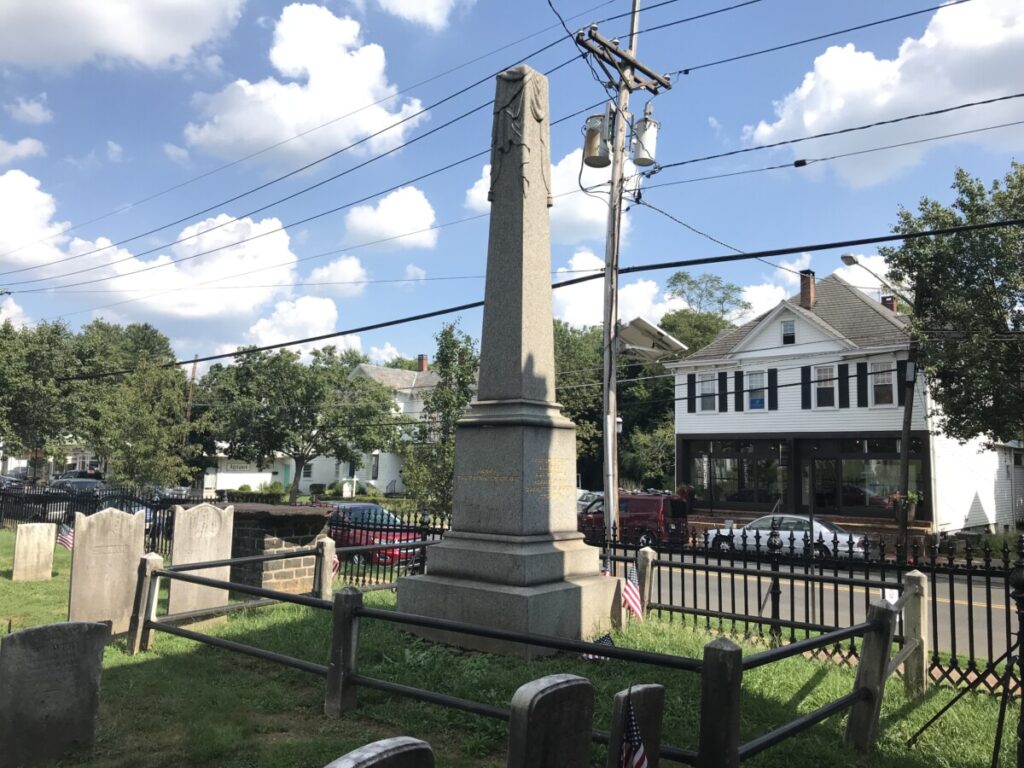
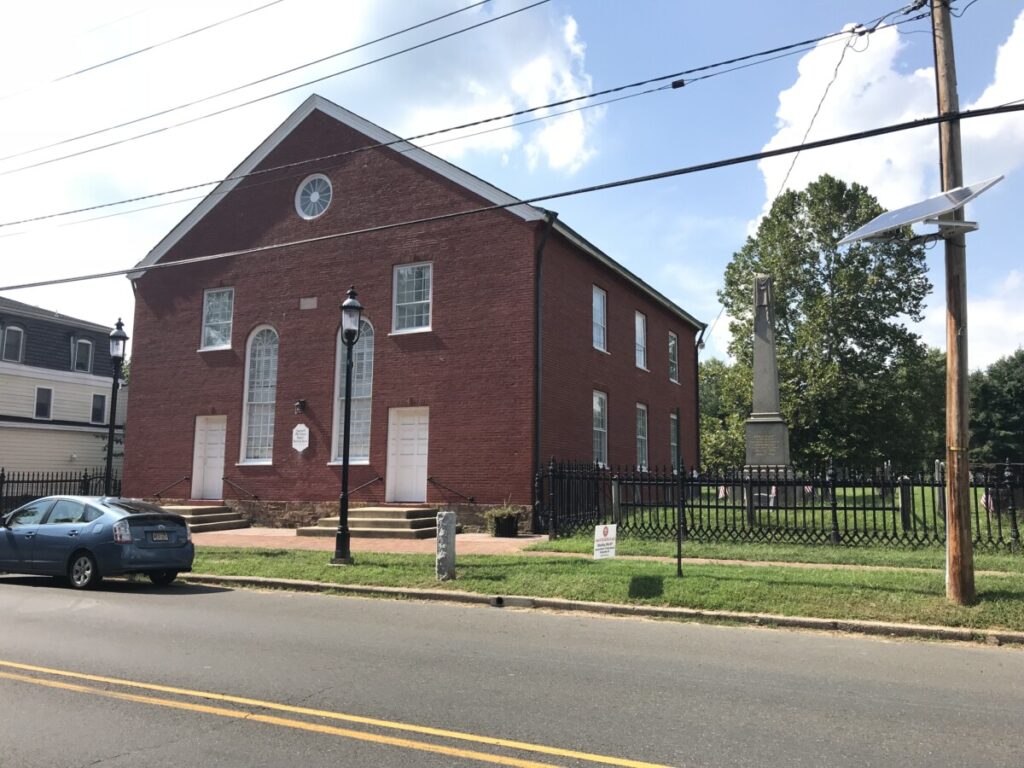
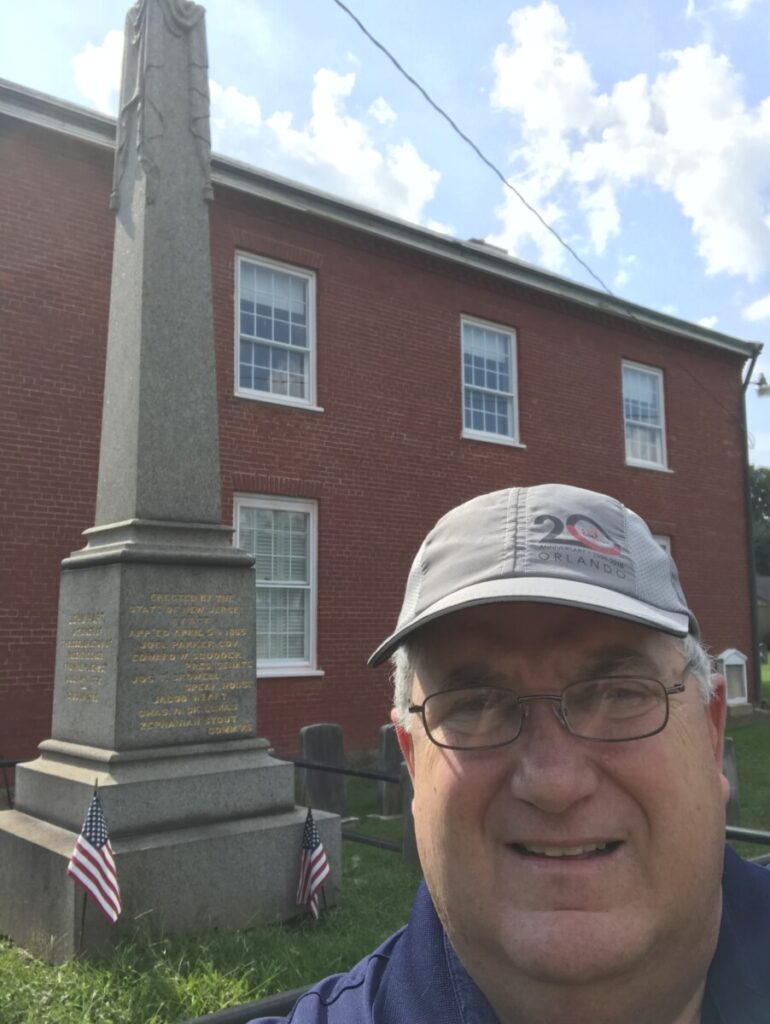
Hart and his wife, Deborah, were eventually buried at the Baptist cemetery on Broad Street in Hopewell, New Jersey. This was fitting because Hart had donated part of his land, known as the lower meadow, to the Baptists in 1747 for a church and cemetery.
There is one interesting note for visitors: the obelisk marking Hart’s grave lists his death year as 1780, but most biographers and the New Jersey Gazette give his date of death as May 11, 1779.
Legacy of “Honest John”
The New Jersey Gazette praised Hart shortly after his death, describing him as a faithful and upright patriot who served his country and county until his final illness. Benjamin Rush, another signer of the Declaration, called him “a plain, honest, well-meaning Jersey farmer,” with little education but enough good sense and virtue to pursue the true interests of his country.
That description fits Hart well.
He was not the most famous signer. He did not write the Declaration. He did not command armies. He did not become president, governor, or Supreme Court justice. But he served faithfully for nearly three decades. He built a life through farming and business. He raised a large family. He accepted public responsibility. And when the moment came, he stood for independence.
John Hart’s story reminds us that the American Revolution depended on more than famous names. It depended on local leaders who were willing to risk everything. Hart was one of those men — practical, steady, respected, and brave.
On July 3, 2006, the Descendants of the Signers of the Declaration of Independence dedicated a bronze plaque honoring John Hart and his wife, Deborah Scudder Hart, at the Baptist Meeting House in Hopewell. Many descendants attended the ceremony.
That seems like a fitting tribute. John and Deborah Hart now rest on land he once gave for church and community use. For visitors today, his burial place offers a quiet connection to a man who helped shape American independence not through fame or flash, but through honesty, service, sacrifice, and courage.
Leave a Reply