Thomas Jefferson: Author of the Declaration and Voice of American Independence
Birth and Death
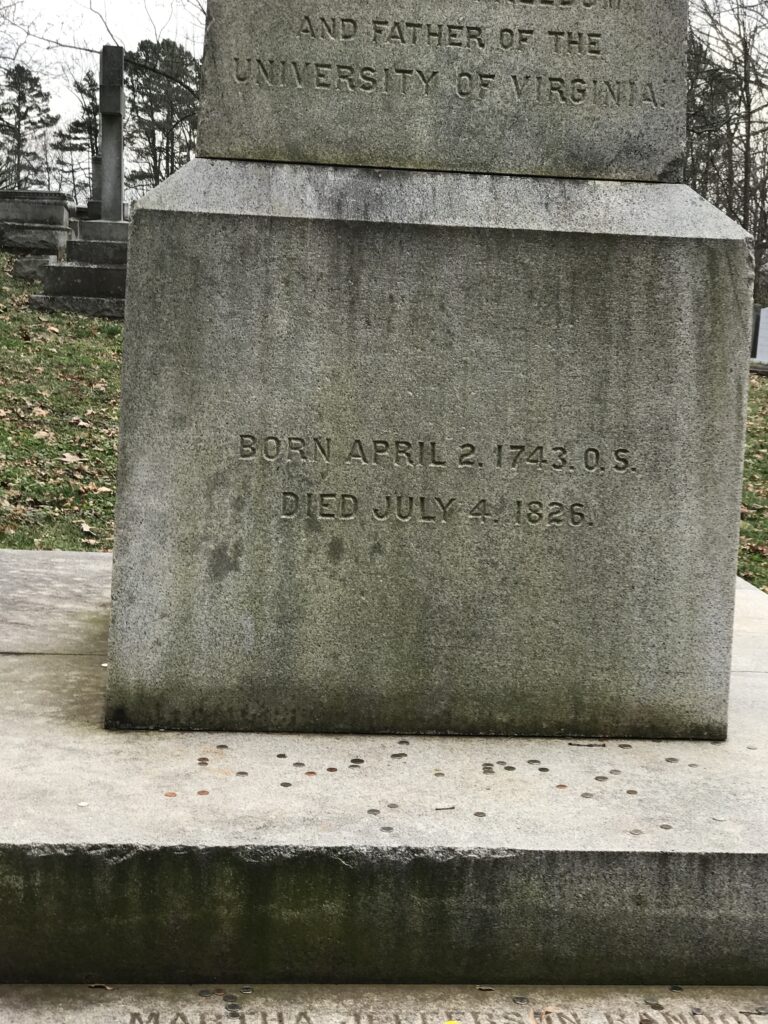
Thomas Jefferson was born on April 13, 1743, at Shadwell Plantation in Virginia, near what later became Albemarle County. Under the old Julian calendar used at the time of his birth, the date appeared as April 2, 1743, which explains the “O.S.” — Old Style — reference later placed on his grave marker.
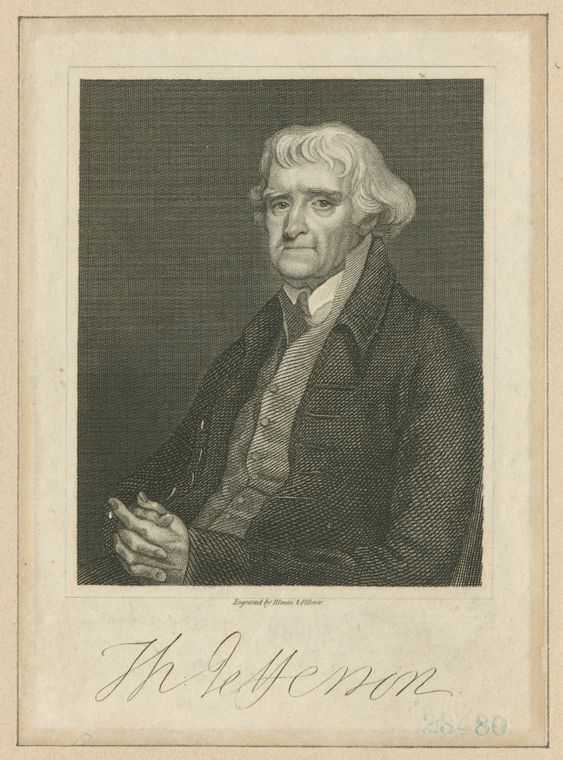
He died on July 4, 1826, at Monticello, on the fiftieth anniversary of the adoption of the Declaration of Independence. In one of those almost unbelievable moments in American history, Jefferson died only hours before his old friend, political rival, and fellow Declaration signer John Adams.
Early Life in Virginia
Thomas Jefferson came from deep Virginia roots. His father, Peter Jefferson, was a self-made man — a surveyor, magistrate, and planter. His mother, Jane Randolph Jefferson, came from the prominent Randolph family and had Scottish ancestry.
Jefferson was the oldest of eight children. When he was still very young, the family moved from Shadwell to Tuckahoe Plantation near Richmond. A few years later, they returned to Shadwell. Then, when Thomas was only fourteen, his father died. That loss shaped the direction of his life. Jefferson inherited nearly 5,000 acres of land, property he would later call Monticello.
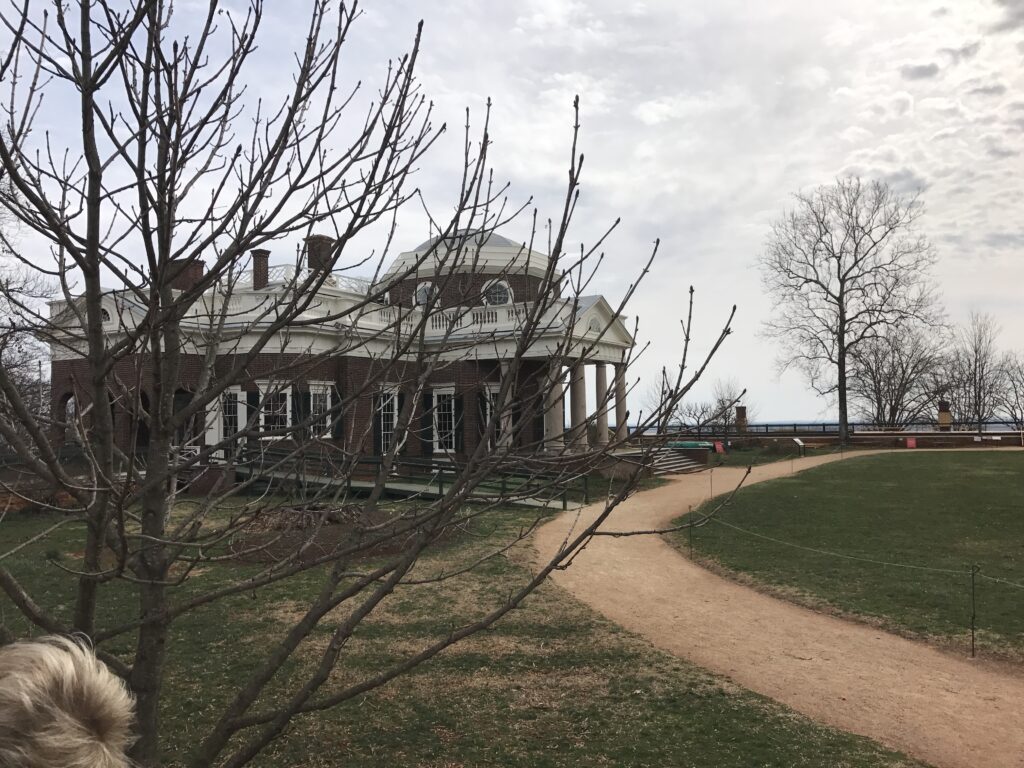
Monticello became more than just his home. It became his retreat, his laboratory, his architectural project, his place of study, and, eventually, his final resting place.
Education and Early Career
Jefferson showed an early appetite for learning. At about age nine, he began studying the classics with a Scottish clergyman named Douglas. In 1760, he entered the College of William and Mary, where he studied for two years.
After college, Jefferson turned toward law. In 1762, he began studying under George Wythe, one of the most respected legal minds in Virginia and, later, another signer of the Declaration of Independence. Jefferson was admitted to the bar in 1767 and opened a law practice.
But even as a young lawyer, Jefferson was already being drawn into the political storm building between Great Britain and the colonies. In 1765, he heard Patrick Henry’s famous speech against the Stamp Act. That speech stirred Jefferson deeply. From that point forward, he became more than a lawyer and planter. He became a defender of colonial rights and American liberty.
Marriage and Family Life
On January 1, 1772, Jefferson married Martha Wayles Skelton, a young widow. Jefferson was tall, slender, red-haired, and already rising in Virginia society. Martha came from wealth, and after her father died in 1773, she inherited land and enslaved people, adding significantly to the Jefferson estate.
Thomas and Martha had six children, though only two daughters — Martha “Patsy” Jefferson and Maria “Polly” Jefferson — lived to adulthood. Martha Jefferson died in 1782, a loss that deeply affected him. According to the article, when Jefferson died decades later, attendants found a locket around his neck containing a faded ribbon tied around a lock of Martha’s hair. That small detail reminds us that behind the public figure was a man who carried private grief for much of his life.
Entering Public Life
Jefferson entered Virginia politics in 1769, when he was elected to the Virginia House of Burgesses. He served there until 1775, just as tensions with Great Britain moved from protest to open resistance.
In 1774, Jefferson wrote a powerful pamphlet titled “A Summary View of the Rights of British America.” In it, he argued that Parliament had no authority to control the colonies and that the colonies were connected to the king only by mutual agreement and benefit. That was bold language for the time. The pamphlet offended Lord Dunmore, Virginia’s royal governor, who threatened Jefferson with prosecution for high treason.
Jefferson’s fellow Virginians stood by him, and the matter eventually faded. But the pamphlet helped establish Jefferson as one of the clearest writers of the American cause.
Jefferson and the Declaration of Independence
Jefferson was elected to the Continental Congress in 1775, though his mother’s death kept him away from Congress for several months. He returned in May 1776, just as the movement toward independence reached its breaking point.
On June 11, 1776, Congress appointed a committee to draft a formal declaration. The committee included Thomas Jefferson, John Adams, Benjamin Franklin, Roger Sherman, and Robert Livingston.
Jefferson first suggested that John Adams should write it. Adams refused and gave Jefferson three reasons. First, Jefferson was a Virginian, and Adams thought a Virginian should be at the head of the effort. Second, Adams considered himself unpopular and controversial. Third, Adams told Jefferson that he could write “ten times better” than Adams could.
So, at only 33 years old, Thomas Jefferson drafted the Declaration of Independence.
His draft was submitted to Congress on June 28, 1776, after a few edits from Adams and Franklin. Congress voted for independence on July 2, 1776, then spent the next two days debating, revising, and trimming Jefferson’s language. On the evening of July 4, 1776, Congress approved the Declaration.
The most famous lines — that all men are created equal, and that they possess rights to life, liberty, and the pursuit of happiness — became some of the most powerful words ever written in American history. Those words did not resolve all of America’s contradictions, but they set a standard by which future generations would measure its promises.
One of the most important portions deleted from Jefferson’s draft addressed slavery. Jefferson had included a passage attacking the slave trade and blaming King George III for its continuation. That passage sparked intense debate and was removed. Jefferson later blamed delegates from South Carolina and Georgia, along with some Northern delegates connected to the trans-Atlantic slave trade.
That moment remains one of the great tensions in Jefferson’s story. He wrote some of the most stirring words for human liberty while also living within, benefiting from, and participating in a slaveholding society. His life, like the founding generation itself, forces us to look honestly at both the ideals and the contradictions of early America.
Return to Virginia and Reform Efforts
After Congress adopted the Declaration, Jefferson returned to Virginia. In September 1776, he resigned from Congress and chose to serve his own state.
From 1777 to 1779, he worked on revising Virginia’s laws. Among his proposals were measures to stop the importation of enslaved people, protect religious freedom, and establish public education. These efforts showed what Jefferson believed should support a free republic: liberty of conscience, an educated citizenry, and laws built on republican principles rather than inherited privilege.
Governor of Virginia During the Revolution
In June 1779, Jefferson succeeded Patrick Henry as governor of Virginia. His time as governor came during one of the most dangerous periods of the Revolutionary War.
In 1781, the British brought the war into Virginia. Richmond was partly destroyed by forces led by the traitor Benedict Arnold, now fighting for the British. Jefferson and his council barely escaped capture.
Later, when the Virginia legislature met in Charlottesville, British cavalry under Banastre Tarleton attempted to capture Jefferson and the lawmakers. Jefferson sent his family away in a carriage, stayed behind to handle official matters, then escaped on horseback through the woods.
After his governorship, some questioned whether Jefferson had done enough to prepare Virginia militarily. The House of Delegates later formally vindicated him.
Diplomat, Secretary of State, Vice President, and President
After Martha’s death, Jefferson eventually returned to public life. In 1784, he joined John Adams and Benjamin Franklin as a minister to negotiate treaties of commerce with foreign nations. He went to France with his daughter, Patsy, and witnessed the early stages of the French Revolution.
When Franklin returned home, Jefferson succeeded him as the American minister to France and served there until 1789.
Back in the United States, Jefferson became the first Secretary of State under President George Washington. He later served as Vice President under John Adams from 1797 to 1801, and then as the third President of the United Statesfrom 1801 to 1809.
As president, Jefferson’s most famous achievement was the Louisiana Purchase in 1803, which nearly doubled the size of the United States. He also sent Lewis and Clark westward to explore the vast new territory and reach the Pacific. His presidency also included the controversial Embargo Act, which attempted to use trade restrictions to protect American interests but caused economic hardship at home.
Monticello, the University of Virginia, and Final Years
After two terms as president, Jefferson retired to Monticello. He spent the last seventeen years of his life corresponding with leaders, scientists, explorers, and citizens. He welcomed visitors, studied widely, and continued designing and building.
Jefferson was deeply interested in architecture. He designed and built Monticello, helped design the Virginia State Capitol in Richmond, and designed his retreat at Poplar Forest near Lynchburg. In retirement, his greatest project became the University of Virginia, founded in 1819. He served as its rector until his death.
Financially, however, Jefferson’s final years were difficult. He fell deeply into debt and eventually sold his large private library of about 10,000 volumes to Congress. That library became the foundation of the Library of Congress.
Death, Burial, and Legacy
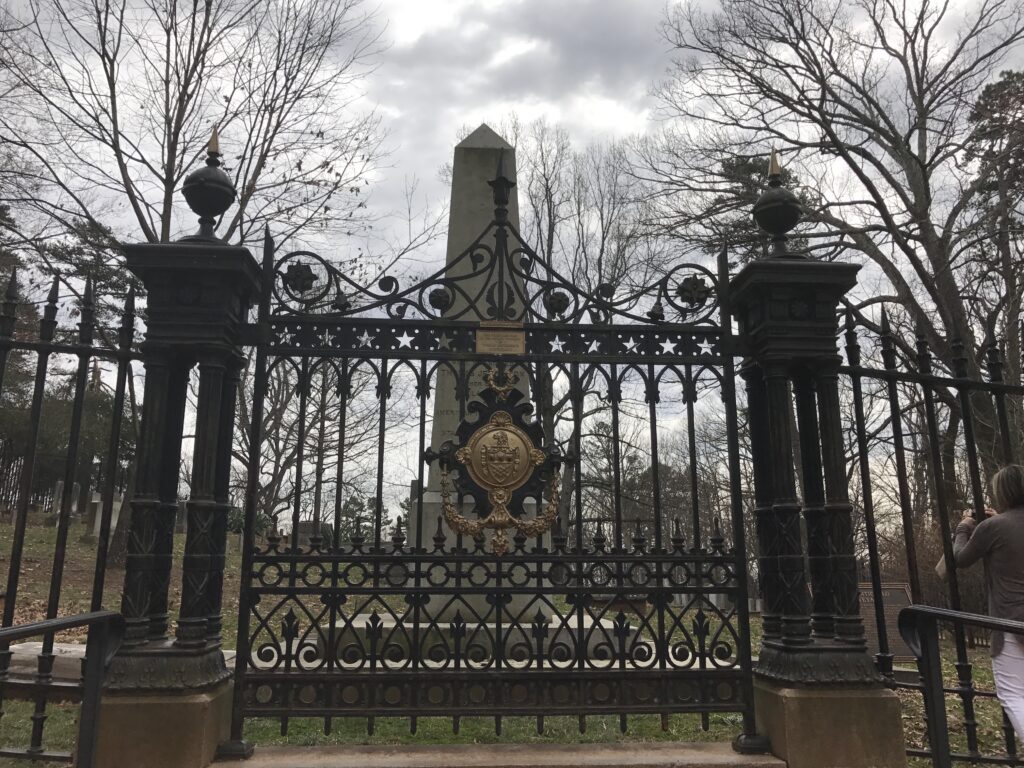
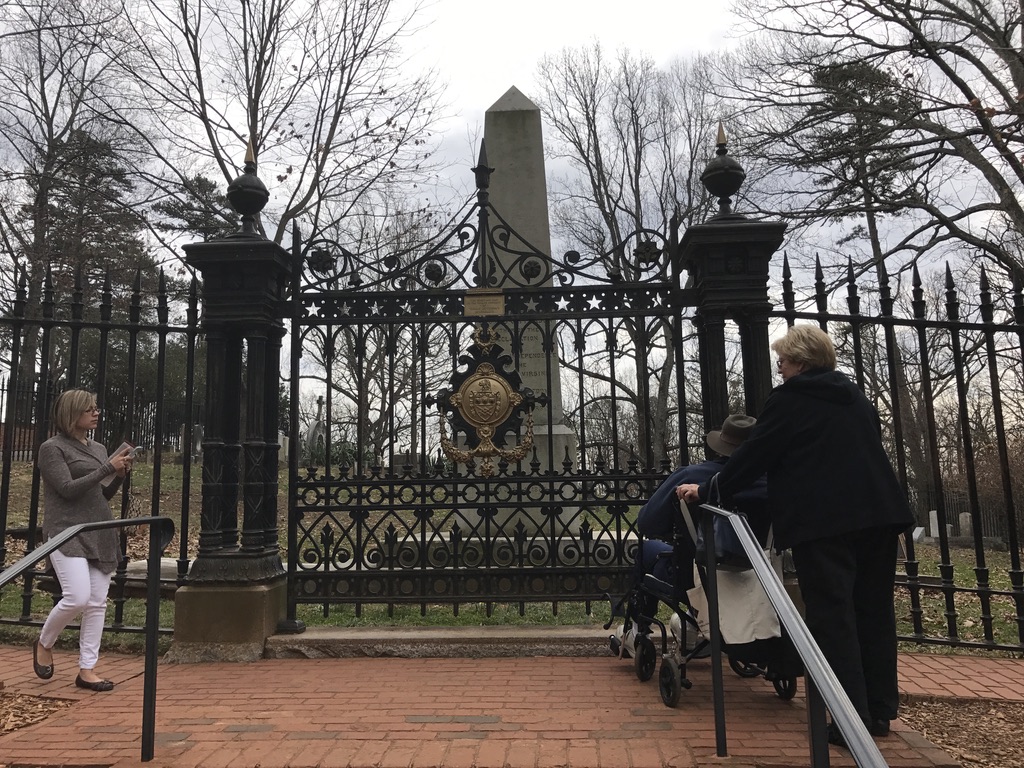
Jefferson died at Monticello on July 4, 1826, fifty years after the Declaration was adopted. He is buried in the Jefferson Family Cemetery at Monticello, near Charlottesville, Virginia.
Jefferson personally wrote the inscription he wanted on his grave. He did not list president, vice president, secretary of state, governor, diplomat, or architect. Instead, he chose three achievements:
Author of the Declaration of American Independence
Author of the Statute of Virginia for Religious Freedom
Father of the University of Virginia
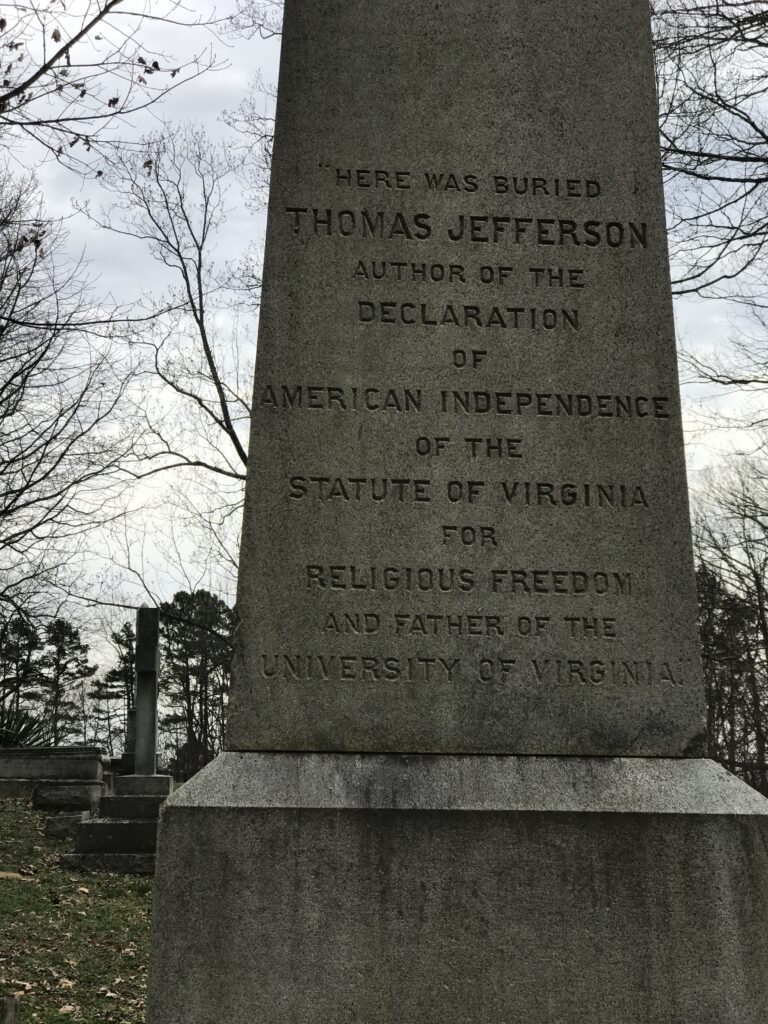
That tells us what Jefferson hoped would endure: liberty, freedom of conscience, and education.
For a SignersTour visit, Monticello is one of those places where the story of America feels very close. You can stand near Jefferson’s grave and think about the words he wrote in 1776 — words that outlived him, challenged the nation that adopted them, and still shape the American conversation today. Thomas Jefferson was not a simple man, and his legacy is not a simple story. But he was undeniably one of the central voices of American independence, and his pen helped give the new nation its most famous statement of purpose.


Leave a Reply